As the world’s temperatures rise and heatwaves become more frequent, gardeners must work harder to protect plants from the stress caused by heat and drought.
Plants can suffer a lot from being in high temperatures for a long time, which can cause them to wilt, scorch their leaves, stop growing, or even die. During the hottest months, it’s important to know how to spot and treat heat stress in order to keep your garden healthy. In particular, knowing how to protect your garden in a heatwave is key.
Table of Contents
ToggleWhat Is Heat Stress in Plants?
When plants are exposed to temperatures that are too high for their growth and development, they can experience heat stress. Plants can suffer damage to their cells when they are exposed to too much heat. This can include protein denaturation and damage to the membranes.
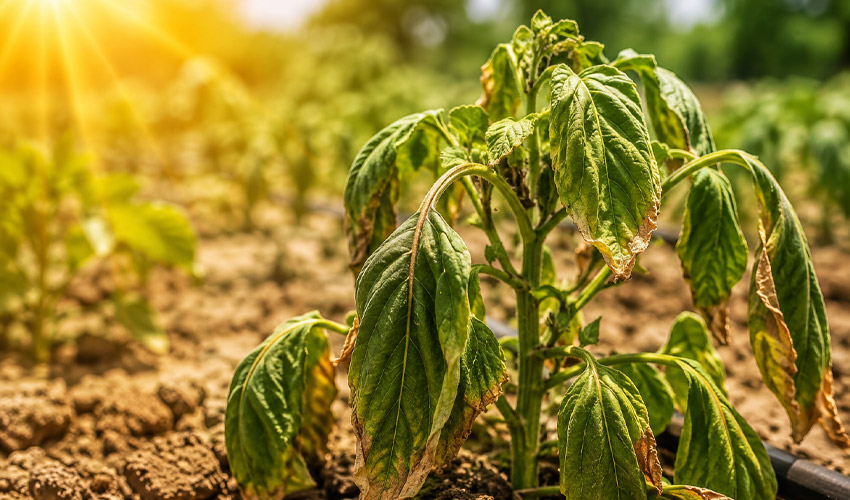
This can make photosynthesis less effective because the heat can stop photosynthetic enzymes from working and close stomata to save water, which limits the amount of carbon dioxide that can be taken in. Also, heat stress can cause oxidative damage by producing too many reactive oxygen species, which can damage cell parts even more. Plants may show signs like wilting, leaves turning yellow, slower growth, and lower yields.
Plants have developed different physiological and biochemical ways to deal with heat stress. When the temperature rises, plants make heat-shock proteins that help keep proteins and membranes stable and change their metabolic pathways to keep cells in balance.
What Are the Most Common Heat Stress Symptoms in Plants?
Next, we’ll explain how you can identify the most typical signs of heat stress in plants.
Leaf Rolling and Curling: Plants like corn and tomatoes may roll or curl their leaves to minimize water loss. This process helps reduce the leaf surface area and close stomata, the tiny pores responsible for gas and moisture exchange.
Plant Wilting: When plants lose more water than they can take up, they begin to wilt. This indicates a lack of internal water pressure. If plants droop during the hottest part of the day but recover in cooler periods, it often signals heat stress.
Dry Leaf Edges: Some crops, such as pumpkins and squash, may dry out along the outer leaf edges as a survival response. This helps limit water loss while still preserving some leaf function.
Ozone Injury: High heat combined with poor air quality can lead to ozone damage. This shows up as dry brown patches on leaves of crops like tomatoes or as pale yellow, dried foliage in squash, cucumbers, and pumpkins.
Flower and Fruit Drop: Excessive heat can cause ornamental plants to stop blooming or shed buds and flowers. In crops like cucumbers, squash, and peppers, it may result in flower and fruit drop.
Bolting: Cool-season crops like lettuce, broccoli, spinach, cauliflower, and cilantro may bolt, meaning they flower too early due to heat stress. This reduces both the quality and overall yield.
Sunscald: Fruits such as apples, tomatoes, and melons can suffer from sunscald under intense heat. It appears as discolored, water-soaked spots, blisters, or firm, sunken areas on the fruit surface.
Blossom-End Rot: In tomatoes, high temperatures and intense sunlight can accelerate photosynthesis and transpiration, redirecting water and calcium from fruits to leaves. This leads to blossom-end rot, seen as a dark, water-soaked patch on the fruit.
Stunted Growth: Elevated temperatures can slow down enzyme activity and disturb metabolic functions, resulting in poor growth and limited development.
Leaf Aging and Drop: Heat stress may cause leaves to age prematurely and fall off, reducing the plant’s ability to perform photosynthesis and grow efficiently.
How To Save Plants From Heat Stress
There are several preventative measures that you can take to reduce heat stress in plants.
- Water thoroughly in the early morning or late evening to reduce evaporation and minimize heat stress in plants.
- Use drip systems or soaker hoses to keep leaves dry and prevent foliar diseases.
- Add organic mulch (bark, straw, leaves) to conserve moisture and keep soil temperatures lower.
- Avoid gravel mulch, as it can raise soil and root zone heat levels.
- Irrigate newly mulched plants well so the mulch doesn’t draw moisture away from roots.
- Avoid fertilizing during extreme heat to prevent additional dehydration and root damage.
- Limit herbicide application in high temperatures to reduce chemical drift and plant injury.
- Pay extra attention to plants near concrete, patios, or driveways since they trap and radiate heat.
How Quickly Do Plants Recover from Heat Stress?
The recovery time for heat-stressed plants can range from a few days to several months, depending on the extent of the damage. Mildly affected plants may bounce back quickly within days, while severely stressed plants can take weeks or even months to fully recover.
The healing period largely depends on how intense the heat damage is and how quickly care is provided. Plants that were neglected during a prolonged heatwave may take much longer to regain strength, and in extreme cases, recovery may not be possible.
How To Help Plants Recover From Heat Stress
Healthy plants are naturally resilient and can recover from stress when given proper care, sufficient water, and adequate shade. If your plants are experiencing heat stress, try these simple steps to minimize damage and support faster recovery:
- Set up a temporary shade, such as a light-colored shade cloth, to reduce direct sun exposure.
- Water deeply using drip irrigation in the early morning or late evening to improve absorption.
- Apply a 2–3 inch (5–8 cm) layer of mulch to regulate soil temperature and retain moisture.
- Avoid replanting during extreme heat, as it can further stress the plants.
- Hold off on fertilizing until the heatwave passes to prevent additional strain.
- Remove dead flowers carefully, but don’t cut off partially damaged leaves, as they still provide shade and support photosynthesis.
Additional Tips and Tricks
Cool the Surrounding Area: Place potted plants on trays filled with water or lightly mist the area around them to boost humidity and lower the air temperature.
Choose Heat-Resistant Varieties: Select plant types that can tolerate high temperatures. Native plants and succulents are often naturally more heat-tolerant.
Monitor Plants Regularly: Keep a close watch on your garden and adjust care when needed. Even small changes, like shifting a pot to a shaded spot, can make a noticeable difference.
Use Reflective Mulch: Reflective mulch helps keep the soil cooler by bouncing sunlight away, which reduces heat and preserves moisture.
Maintain Proper Spacing: Space plants appropriately to improve airflow and prevent excess heat from building up around the leaves.