
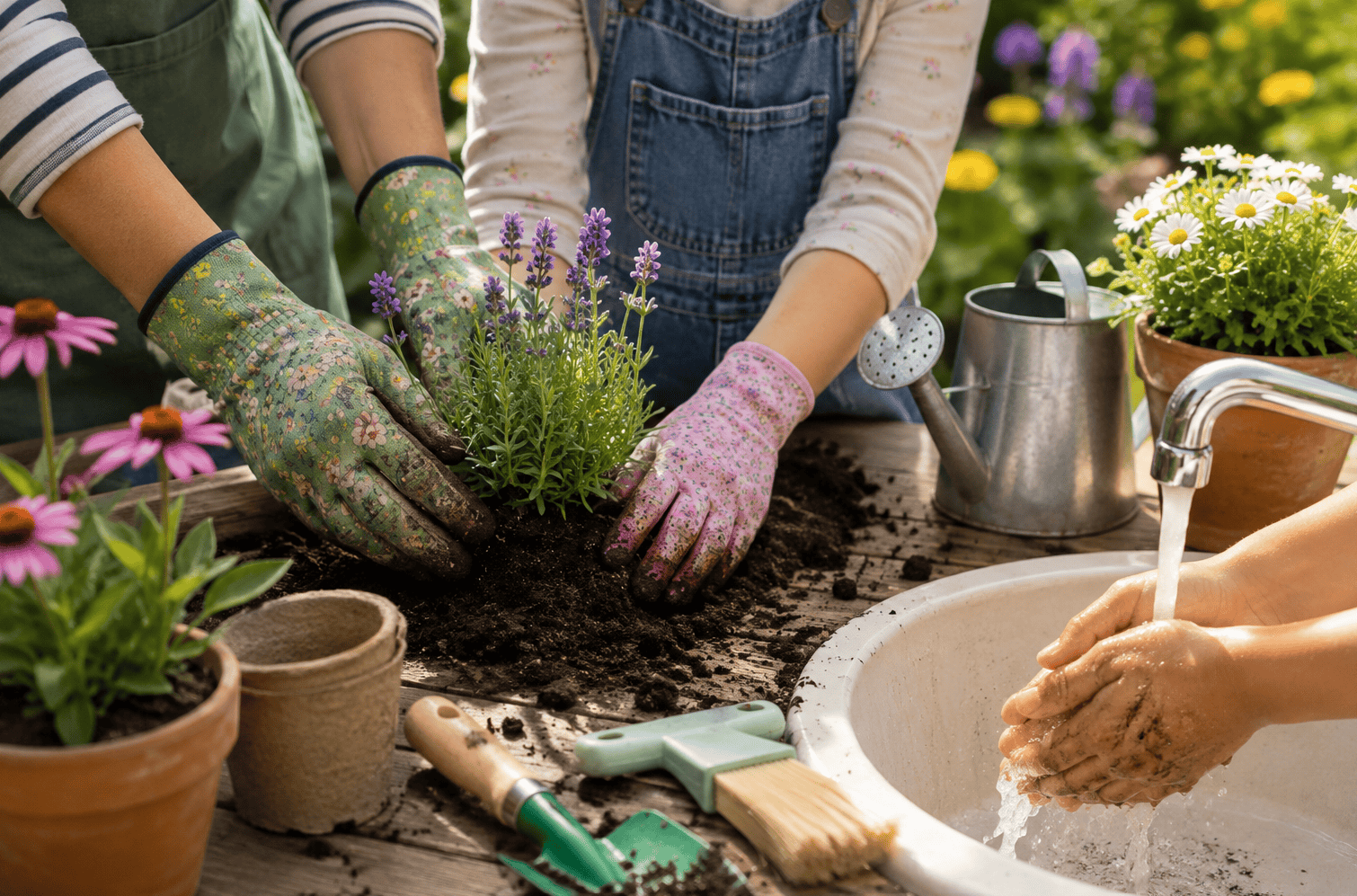
Some of my favorite hours with our kids have been spent in the garden: a trowel that’s a little too big for their hands, a row of seeds that never quite ends up straight, and the look on their faces when something they planted actually comes up. I wouldn’t trade those mornings. Our kids also have eczema-prone skin, and I learned early that dirt, sap, sun, and a long stretch of bare-armed weeding can leave their skin feeling tight, itchy, or just plain uncomfortable by lunchtime.
I’m a dad, not a doctor, and this is not medical advice. If something about your child’s skin worries you, check with your pediatrician. What follows is the practical routine we use so our kids can stay in the garden without coming inside feeling raw.
Table of Contents
ToggleStart with gloves and clothing
I look for kids’ gloves that actually fit. Adult gloves that flop off the fingertips get pulled off after five minutes, so a snug pair of lightweight cotton or nitrile gardening gloves works better than a bulky pair they refuse to keep on. We keep a designated “garden pair” by the back door, and I skip anything with a rough inner seam or a sticky coating. If a glove feels scratchy on my own wrist, it doesn’t go on our kids. After we come in, the gloves get a rinse or a wash and then a full dry, so yesterday’s soil isn’t sitting against their hands tomorrow.
Long sleeves and long, soft pants in a breathable fabric, usually cotton, keep leaves, sap, and mulch off the arms and legs. Loose fits are more comfortable than tight cuffs that rub at the wrists and ankles. We check tags and seams, and we snip anything that scratches. Closed-toe shoes and socks beat sandals around damp soil and wood chips. A wide-brimmed hat helps with sun on the face and neck, and a thin cotton layer is easier to add or peel off than one heavy sweatshirt. If someone gets sweaty, we change that shirt when we come in, because salt and damp fabric sitting on sensitive skin can leave a good morning feeling scratchy by afternoon.
Choose plants with skin in mind
I walk the beds more carefully now that our kids are old enough to help. Some plants are more likely to leave skin red, itchy, or stinging after a lot of handling. The milky sap in some euphorbias, including popular garden spurges, can be a real irritant on bare skin or near the eyes. Tomato leaves and stems bother some people, even when the fruit itself is a kitchen favorite. Chrysanthemums, and some of their relatives in the daisy family, stay off our picking list. Stinging nettles, poison ivy, poison oak, and poison sumac are obvious ones to remove or clearly mark if they show up along a fence line. I also watch for plants with sap that can be harsher in the sun, such as giant hogweed, rue, fig, and some members of the carrot family, including certain kinds of parsley and celery.
If I’m unsure about a plant, I look it up, and I do the sap-heavy jobs myself. Gloves still go on for anything with sticky stems. If sap gets on skin, we wash it off with lukewarm water right away and keep hands away from faces until that happens.
Gentler options still feel like a real garden. Lamb’s ear is a favorite here: the leaves are soft enough that our kids seek them out on purpose. Snapdragons, pansies, violas, impatiens, and coleus bring color without thorns or sticky sap. In the vegetable beds, we have had good luck with lettuce, spinach, garden peas, bush beans, and basil. Strawberries are a hit when they’re ripe, as long as we wash hands and faces afterward. I still grow tomatoes. I just do more of the leaf-heavy pruning myself, and the kids help with the fruit once it’s off the vine.
Pay attention to sun and soil
A mild morning can turn sharp by mid-morning. We try to garden earlier or later in the day, and I set up a little shade, even if that’s just a patio umbrella at the end of the row. Hats stay on, and we use a kids’ sunscreen on exposed skin before we head out, following the directions on the bottle and our pediatrician’s guidance. I put more on when the label says to, especially if anyone has been sweating or wiping their face with dirty hands.
Soil is usually the fun part, but it can be drying, and it’s rarely just plain dirt. Compost, fertilizer, and some potting mixes can leave hands feeling tight or itchy, and mulch can scratch. I keep our kids from sitting or kneeling bare-legged in the beds, and a small kneeling pad or an old cotton towel saves a lot of cleanup. We also keep little hands away from eyes, mouths, and any already-itchy patches while they’re still covered in soil. If the soil is dry and dusty, I dampen it lightly first. After handling compost or fertilizer, we go straight to wash-up, and tools get a rinse so a dirty trowel handle doesn’t put yesterday’s soil back on today’s hands. If we use the hose, I try not to soak the kids, and wet clothes come off when we go inside.
Make wash-up and moisturizing the last step
This is the habit that made the biggest difference for us, even when lunch is already late. We come inside, shoes off at the door, and go to the sink or tub before anyone flops on the couch.
We use lukewarm water, not hot, and a mild cleanser only where it’s needed: hands, under the nails, and any spots with visible soil or sap. A long, steamy shower can leave dry, sensitive skin feeling tighter afterward, so I keep wash-ups short, rinse thoroughly, and use a soft cloth instead of a rough brush.
Then I pat, not rub, with a soft cotton towel, and I get a moisturizer on while the skin is still a little damp. A thicker cream, smoothed over hands, arms, faces, and any other areas that were exposed, helps the skin feel more comfortable after a morning outside. In our house, that cream is often our Original Skin-Soothing Cream. It carries the National Eczema Association’s NEA Seal of Acceptance. It contains almond oil, so if anyone at home has a tree-nut allergy, we use a different option from the line.
I keep the jar by the sink we actually use after gardening, and soft, clean clothes go on after that, not the shirt they were weeding in. If hands still feel dry at bedtime, we put on a little extra cream.
None of this is about keeping our kids out of the garden. It’s about letting them stay in it. A fitting pair of gloves, a little thought about what they handle, some shade, and a short wash-and-moisturize routine at the end have made those mornings easier on their skin, and much easier on me.