A beautifully designed garden can do wonders for the exterior appearance of a home, create an incredibly relaxing outdoor space, and of course provide extra room for everyday activities. But by 2026 – so a few years from now – it’s clear that property owners are starting to look for outdoor spaces that are a perfect blend of modern style, eco-friendly, and super practical. Whether it’s something as simple as using local plants or incorporating an outside dining area, there are plenty of ways to turn your outdoor space into a beautiful and functional area. With some well-thought-out landscaping and a bit of understanding of the local weather and personal lifestyle requirements, Sydney homeowners can create a garden that not only complements their property but also fits their needs.
Whether you’ve got a smallish courtyard, a typical suburban backyard, a larger outdoor space, or a really spacious area, modern landscaping has loads of potential to make a real difference to your property. With professional landscaping Sydney services, you can create an outdoor space that suits your lifestyle and complements your home’s design. Here are a few popular trends that you might want to consider when planning a total garden makeover.
Table of Contents
ToggleModern Landscaping Trends for Sydney
1. Sustainable and Eco-Friendly Gardens
Sustainability is of ever-increasing importance in modern garden design, and many people these days want a beautiful garden that not only doesn’t harm the planet but also requires fewer resources to maintain. One of the best ways to get this right is by choosing plants that are specifically suited to your local soil and climate. For Sydney, for example, plant picks such as selected grevilleas, bottlebrush varieties and certain types of lomandra can offer a pop of colour and plenty of texture while also supporting your local wildlife.
Of course, there’s also the practicalities to consider – things like mulching around plants to save soil moisture and reduce weed growth, and making the most out of rainwater collection systems and efficient irrigation. And rather than laying unnecessary paving, why not turn those areas into planted-up zones or use some permeable materials? That way you can be sure you’re managing water better and that your garden is more connected to nature.
The key here, of course, is to pick sustainable features that suit your property rather than just following a trend that you have to keep up with.
2. Native Plants and Natural Garden Designs
Native plants are an increasingly popular choice for contemporary Australian gardens right now. They not only give a natural look but also offer all sorts of practical benefits when they’re matched up to the right conditions.
In the Sydney area, native grasses, flowering shrubs and ground covers, to name a few, can add loads of depth and visual interest. Plus they can attract birds and pollinators and just give the whole garden a more lively feel. But it’s worth remembering that a natural garden doesn’t have to look all untidy – by combining plants of different heights, textures and flowering times you can create a really balanced feel. Grouping similar plants together can also make it look more tidy and organised.
Before you start planting, consider things like sunlight, soil drainage, the amount of space you have available and the mature size of the plants. That way you can pick out plants that will actually thrive in your conditions over time.
3. Outdoor Living and Entertainment Spaces
People are now making their gardens an extension of their indoor living areas. An outdoor entertainment space is where you can enjoy family meals, weekend gatherings, and just chill in the evenings. It’s a great spot to relax and unwind.
You could create a patio, timber deck, covered dining area or pergola, depending on what your property has to offer. Throw in some comfy furniture, planters and suitable lighting and the space really comes alive.
If you’ve got a larger yard, then an outdoor kitchen or barbecue area might be a great addition. Smaller gardens can still benefit from compact dining sets and built-in benches that make the most of the available space.
Think about how you and your family will move around between the house and the garden. A clear connection between indoors and outdoors makes the space far more practical to use.
Waterproofing, drainage and using durable materials should also be in the back of your mind when planning the area, to make sure it stays functional all year round.
4. Low-Maintenance Landscaping
Lots of people lead busy lives, and they want gardens that look their best without causing them endless hassle. Low-maintenance landscaping is all about making some smart decisions when it comes to plants, materials and garden design.
Start by choosing plants that will thrive in your garden’s conditions. You’d be surprised how many shrubs, ground covers, and plants that grow slowly can reduce the amount of pruning you need to do.
Mulched garden beds can cut down on weeds and help the soil retain moisture. Automated irrigation systems might seem fancy but can actually make watering a lot easier if you use them right.
Simplifying things further can be as simple as choosing durable paving and keeping your planting arrangements straightforward. And if you don’t use the lawn that much, consider replacing some of it with garden beds or other practical outdoor surfaces.
Of course, even with a low-maintenance garden, you still need to do some occasional upkeep. The goal is to reduce the amount of work you do while still keeping the outdoors looking healthy and attractive.
5. Minimalist Garden Designs
Minimalism remains a super popular choice for modern homes because it creates a super clean and organised look. A minimalist garden uses simple layouts, limited materials, and plants carefully selected to avoid clutter.
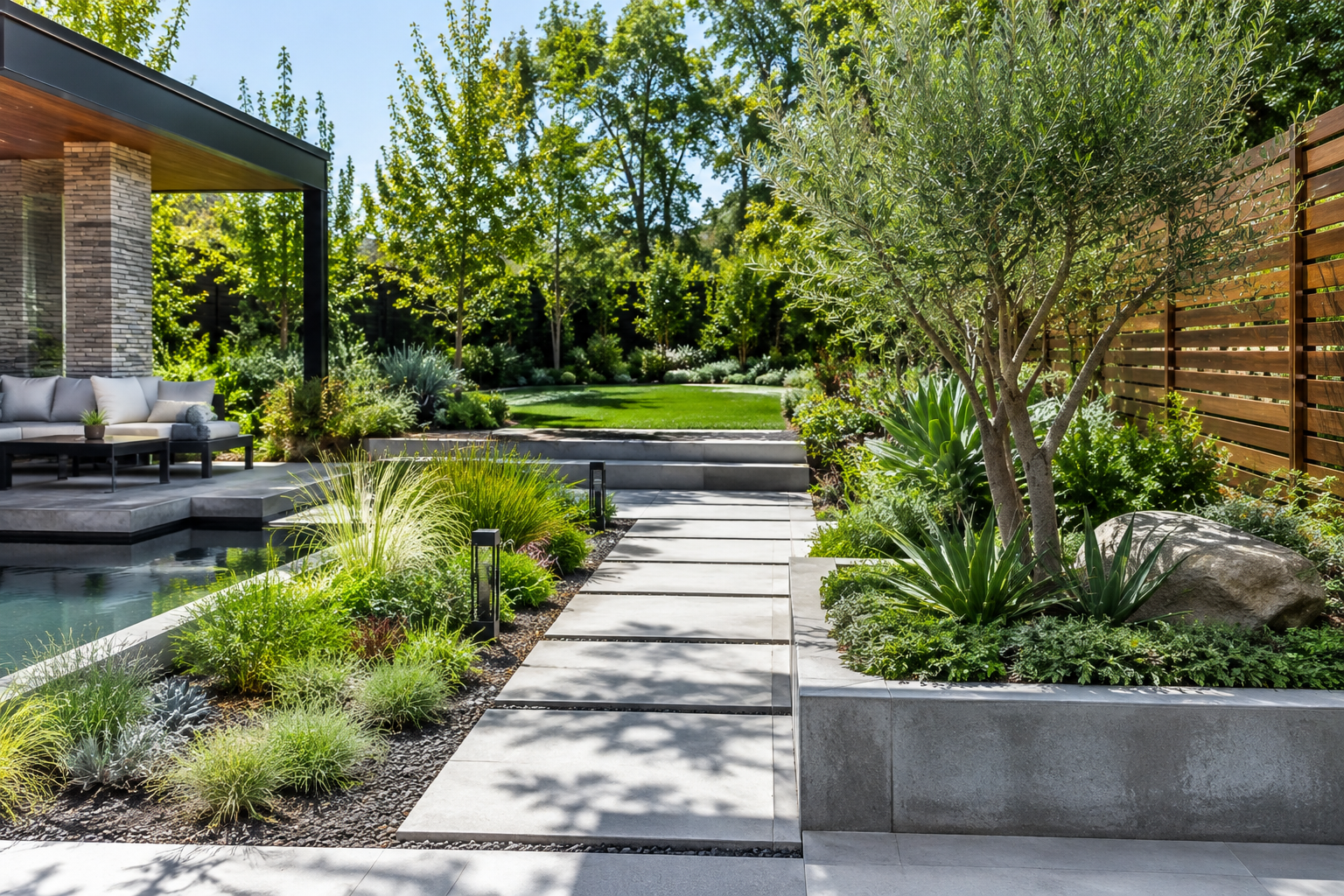
For example, a contemporary garden might use big concrete pavers, a few striking plants and some neatly arranged garden beds. Repeating the same materials and plants can really help create a consistent look.
Neutral colours like grey, beige and natural timber tones can complement modern homes perfectly, and a bit of greenery in the way of foliage adds contrast without overwhelming the space.
Minimalist landscaping is particularly good in smaller spaces like courtyards and urban gardens where a simple layout makes the area feel bigger.
But while simplicity is key, never forget to make the space feel welcoming. Consider adding seats, a bit of shade and enough greenery so people actually want to hang out in the garden.
6. Vertical Gardens for Smaller Outdoors
Not everyone in Sydney has the luxury of a big backyard. Apartments, townhouses and smaller homes just don’t have enough space for a full-size garden. Vertical gardening is one solution that works particularly well in these situations.
Vertical gardens use walls, trellises and hanging baskets to bring in some greenery without taking up heaps of floor space.
Climbing plants can really soften up fences and walls, and wall-mounted pots are great for showing off herbs, flowers and other plants that thrive in pots. A small herb garden up a wall can be a lifesaver for anyone who likes to cook.
Before you start planning your vertical garden, you need to consider a few things: how much sunlight does the wall get, how easy is it to get water up there, is there good drainage, and how heavy is the thing going to be? Some systems need regular maintenance to keep them healthy.
When choosing your plants, pick ones that’ll thrive in the conditions of the wall or balcony. With a bit of thought, even a tiny outdoor area can become a real oasis.
7. Smart Garden Tech
Technology is making it a lot easier for homeowners to keep their outdoor spaces looking good. Smart irrigation controllers, soil sensors, and automated lighting systems can all make garden maintenance a lot less hassle.
Smart irrigation systems can help you schedule watering to the needs of your plants and your local weather. Soil sensors can stop you watering too much by keeping an eye on how much moisture is in the soil.
You can also control your outdoor lighting with timers or by linking it up with your other smart home gadgets. That way you can light up paths, patios and special plants when you need to.
But don’t make the mistake of thinking that technology is a substitute for doing the basic maintenance yourself – it’s meant to be a help, not a replacement. Make sure you get any tech you buy installed right and check on it regularly to make sure it’s still working properly.
Rather than buying loads of kit you don’t need, choose systems that match the size and complexity of your garden.
8. Natural Stone and Textured Surfaces
The way your garden looks and feels has a lot to do with the materials you use. Natural stone, timber, gravel and textured paving can all add some real character to your outdoor space, and look pretty good doing it.
Stone walkways can create a real sense of connection between different areas of the garden, while timber decking is great for creating a warm and welcoming space for sitting out. Decorative gravel can work well in certain garden beds or low-traffic areas.
Combining a few different materials can create some real visual interest without making the design look cluttered. For example, a paved patio can look a lot softer with some timber furniture and some surrounding plants.
Of course, practical considerations are just as important as how it looks. Choose surfaces that are going to be slip-resistant where needed, think about how materials are going to handle the weather, and make sure that walkways and paved areas drain properly.
9. Garden Lighting for Evening Appeal
Outdoor lighting helps to extend the use of a garden well into the evening hours. It also really helps bring out the best in your garden, drawing attention to all the things you want people to see – whether that’s a beautiful pond, a stunning tree or a particularly nice patio.
Lots of people go for low-level pathway lights, wall lights and spotlights for trees – and then there’s the ambient lighting around seating areas which can make them feel like the perfect spot to relax on a warm summer evening.
The key is to focus on lighting the bits of your garden that really matter to you – rather than illuminating every single corner. Soft lighting can make your outdoor dining area feel super inviting, while carefully positioned spotlights can highlight the really special plants or architectural features.
Solar lights can be a great option if you’ve got plenty of sunlight – although some sorts of lighting will need a proper electrician to put in.
To get the best out of your garden lighting – plan it alongside the actual garden design. Try to treat it as a key part of the overall look and feel of the space – rather than just an afterthought.
10. Functional Gardens with Defined Zones
These days landscaping is about more than just how pretty your garden looks – it’s also about making it practical and easy to use.
One of the best ways to do this is to divide your garden up into different areas. For example, a big backyard might have a lawn for the kids, a seating area for grown-ups and a bit of a flower or vegetable garden. With a smaller garden though, you can do the same thing by changing up the paving, the way you arrange your plants or the furniture you use.
If you’ve got a big garden, you can use paths and strategically placed trees to divide up different areas and keep things feeling connected to the rest of the space.
When planning your garden, make sure to think about things like who’s going to be using it, how much sunlight it gets, and how easy it is for people to move around. With a bit of thought and planning, you can turn even the most ordinary garden into a really enjoyable space.
How to Pick the Right Landscaping Trends for Your Home
When it comes to choosing the right landscape design for your home, it’s easy to get caught up in all the latest trends. But the truth is not every design is suitable for every house or garden. Before you start making any changes, consider how much space you’ve got, how much you can afford to spend, and what’s going to be practical for your household.
For example, a small courtyard might look great with some vertical plants and simple materials, while a bigger backyard might be perfect for a fun entertainment area and some native garden beds.
It’s also worth thinking about the long-term costs of plants, irrigation, lighting and other outdoor features. A good design should be able to keep on working and looking great as your plants grow and your household’s needs change.
If you’ve got a major project lined up – whether that’s digging over a whole area, building a retaining wall or installing new drainage systems – it’s a good idea to get some advice from a pro and check what permits you need.
Conclusion
Landscaping these days is all about combining a beautiful design with a practical and sustainable approach. Using native plants, low-maintenance layouts, outdoor spaces for entertaining, and smart irrigation systems are all great ways to create a garden that looks great and is easy to use.
The key is to pick features that work with your home and suit your garden’s conditions. By thinking about plant choice, materials, drainage, lighting and maintenance, you can create a space that will look great and be usable for years to come.
Whether your garden is a tiny courtyard or a whole backyard, it’s all about getting it right from the start. With a bit of thought and the right advice, you can turn your garden into a lovely, functional, and comfortable extension of your home.