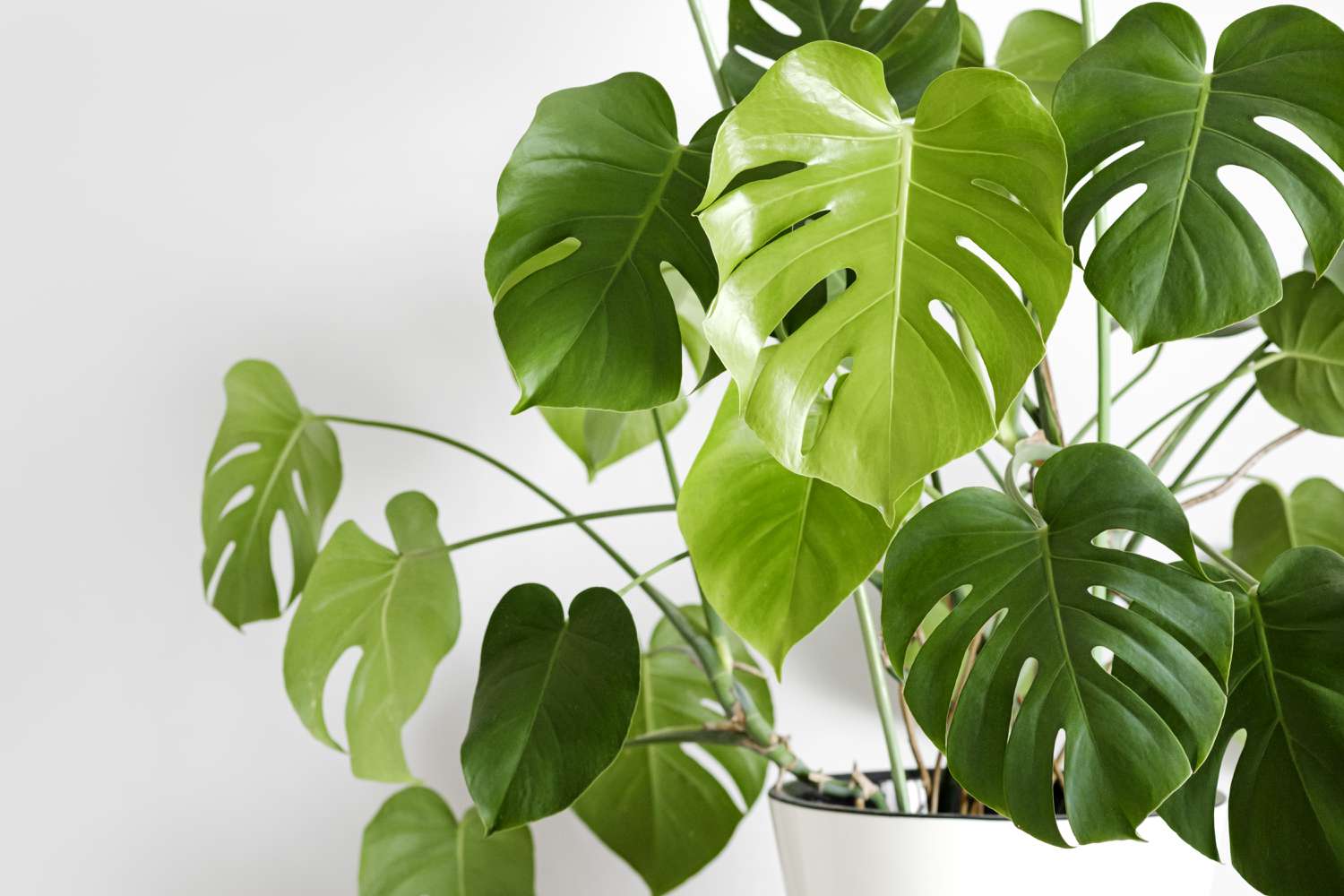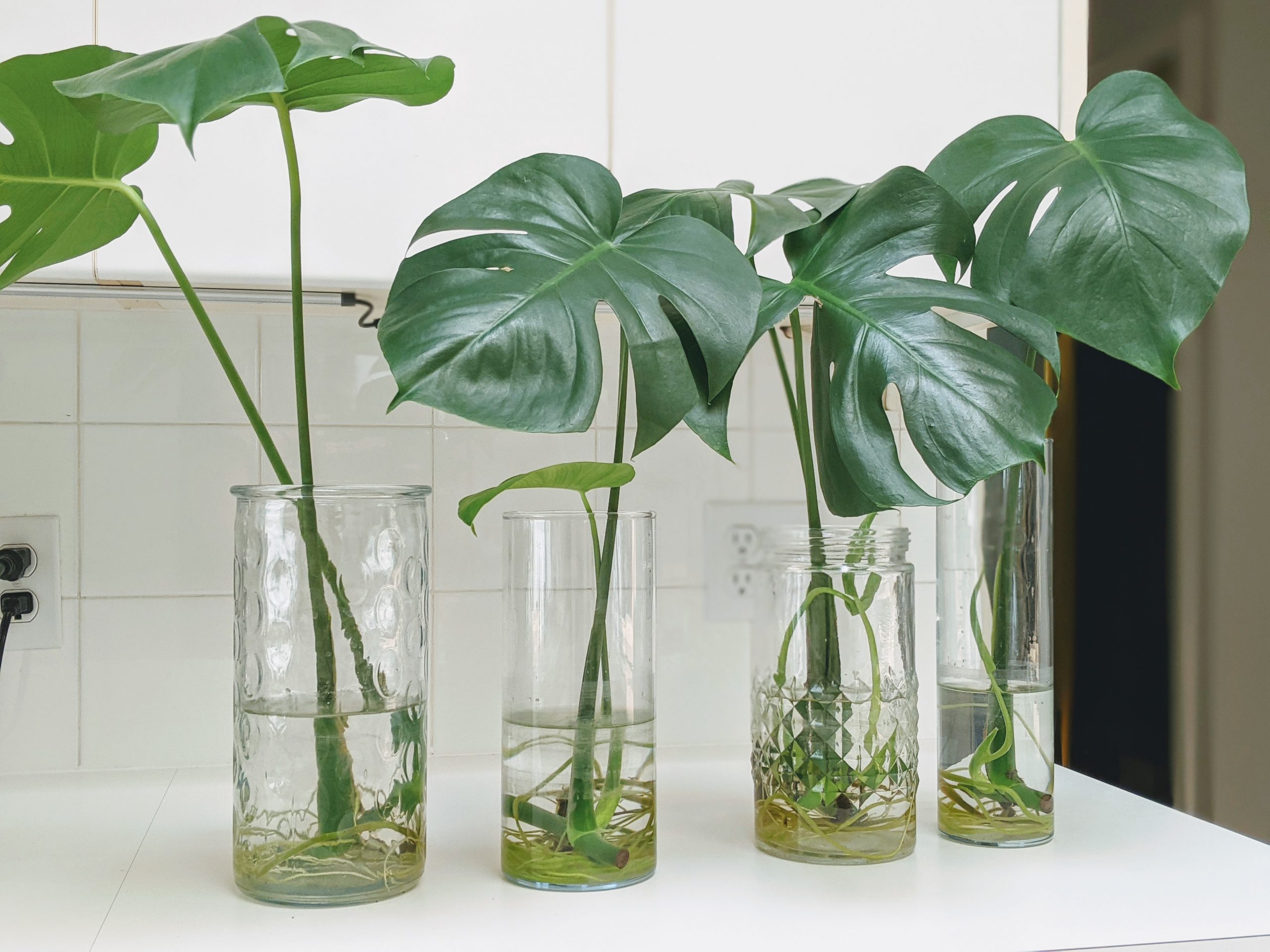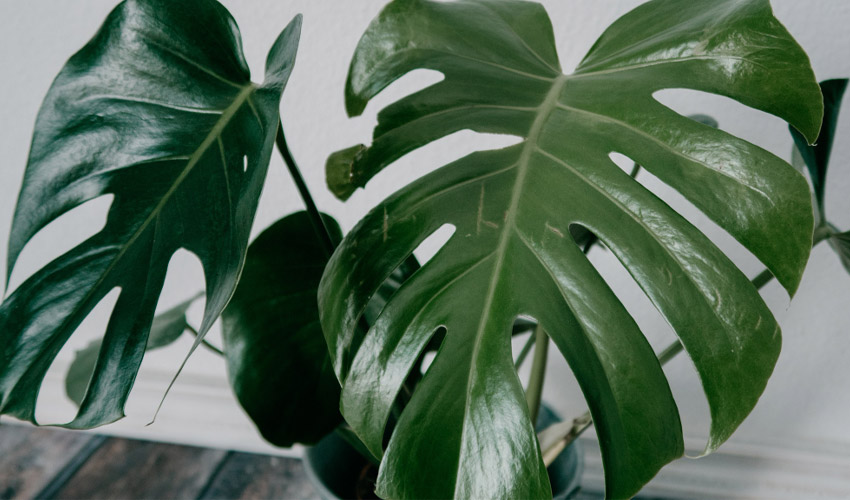
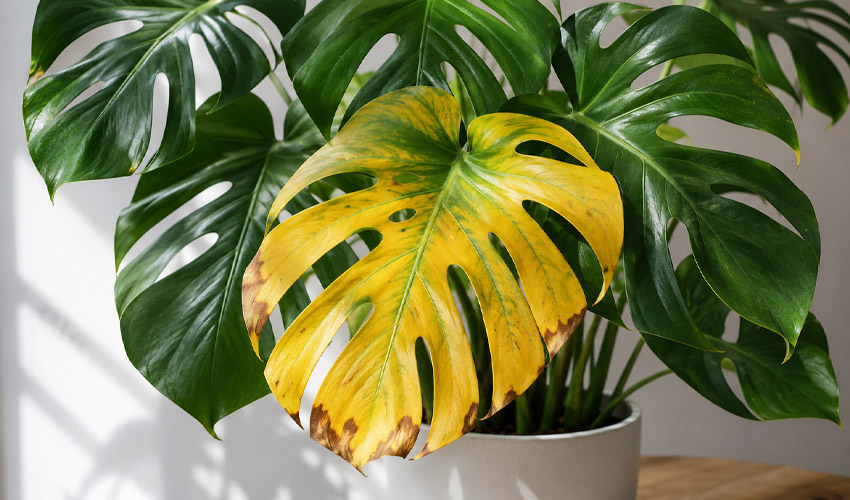
If you own a Monstera, you already know how beautiful its rich green leaves can be. That’s why it can be concerning when your Monstera leaves start turning yellow and drooping. In many cases, yellow leaves are a sign that the plant is being overwatered. Besides excess watering, a lack of sufficient light can also cause Monstera foliage to lose its healthy green colour.
In this guide, we’ll explore the common reasons why Monstera leaves turning yellow and share practical solutions to help your plant recover. Whether you’re a beginner gardener or an experienced gardener, this complete guide will help you identify the problem and keep your Monstera healthy and growing.
Why Is My Monstera Turning Yellow?
Monstera leaves turning yellow usually indicate that your tropical plant is under stress. Several factors can contribute to this issue, including overwatering, nutrient deficiencies, sudden temperature changes, low humidity, and improper lighting. While different types of Monstera may have slightly different care needs, they can all develop yellow leaves when their growing conditions are unsuitable.
The following are the most common causes.
Overwatering
One of the most common causes for Monstera leaves turning yellow is overwatering. Monstera plants like the soil to dry out slightly between watering sessions. When the soil stays constantly wet, the roots may begin to rot and cause the leaves to turn yellow.
Underwatering
On the other hand, underwatering can also lead to yellow leaves. If your Monstera isn’t getting enough moisture, it may start dropping older leaves, which often turn yellow before they fall.
Improper Light Conditions
Monstera plants grow best in bright, indirect light. Too little light can cause the leaves to yellow because the plant cannot produce enough energy through photosynthesis. On the other hand, prolonged exposure to direct sunlight can burn the leaves and result in yellowing.
Temperature and Humidity
Monstera plants thrive in warm, humid conditions. Sudden temperature changes or low humidity can stress the plant, causing its leaves to turn yellow. Keeping your Monstera in a stable environment with adequate humidity can help prevent this problem.
After Repotting
Repotting a Monstera can temporarily disturb its roots, causing transplant shock. This stress may lead to nutrient imbalance and yellowing leaves until the plant adjusts to its new container.
Nutrient Deficiency
A shortage of essential nutrients, especially nitrogen, can make Monstera leaves yellow. If your plant hasn’t been fertilized regularly during the growing season, feeding it with a balanced liquid fertilizer can help restore healthy growth.
Pest Infestation
Inspect your Monstera for common pests such as spider mites and mealybugs. These insects weaken the plant by feeding on its sap, which can result in yellow leaves. Routine inspections can help you detect and treat infestations before they become severe.
Natural Leaf Aging
In some cases, yellow leaves are completely normal. As your Monstera grows, older leaves age naturally, turn yellow, and eventually fall off to make room for fresh new growth.
How to Fix Yellow Leaves on Monstera?
If you’ve spotted yellow leaves on your Monstera, you might wonder whether they’ll turn green again. Unfortunately, once a leaf turns yellow, it cannot become green again because it has already lost its chlorophyll. The good news is that you can encourage healthy new growth by correcting the underlying issues responsible for the yellowing leaves.
Here are some practical ways to fix yellow leaves on your Monstera:
- Check the Soil Moisture: Push your finger about an inch into the soil. If it still feels damp, wait a few more days before watering. If the soil is dry, give your Monstera a thorough watering.
- Adjust Your Watering Routine: Monstera plants prefer the soil to dry out slightly between watering sessions. Water only when the top 1–2 inches of soil feel dry to the touch.
- Improve Light Conditions: Monstera plants grow best in bright, indirect light rather than direct sun. If natural light is limited during winter, consider using LED grow lights. If your plant is receiving harsh afternoon sun, move it to a location with filtered or indirect light.
- Correct Nutrient Deficiencies: Feed your Monstera with a balanced, water-soluble fertilizer during the growing season (spring and summer) to replace essential nutrients and encourage healthy growth.
- Maintain a Consistent Environment: Monstera plants thrive in warm temperatures between 65–85°F (18–29°C) with moderate to high humidity. Keep them away from cold drafts, air conditioners, or heating vents, and use a humidifier if the indoor air is too dry.
- Trim Yellow Leaves: Remove yellow or damaged leaves using clean, sharp pruning shears. Pruning encourages fresh growth while improving the plant’s overall appearance.
- Inspect for Pests: Examine the undersides of the leaves and stems for common pests such as spider mites, aphids, or mealybugs. If you notice an infestation, treat the plant with neem oil or an insecticidal soap to prevent further damage.
Monstera Care for Beginners
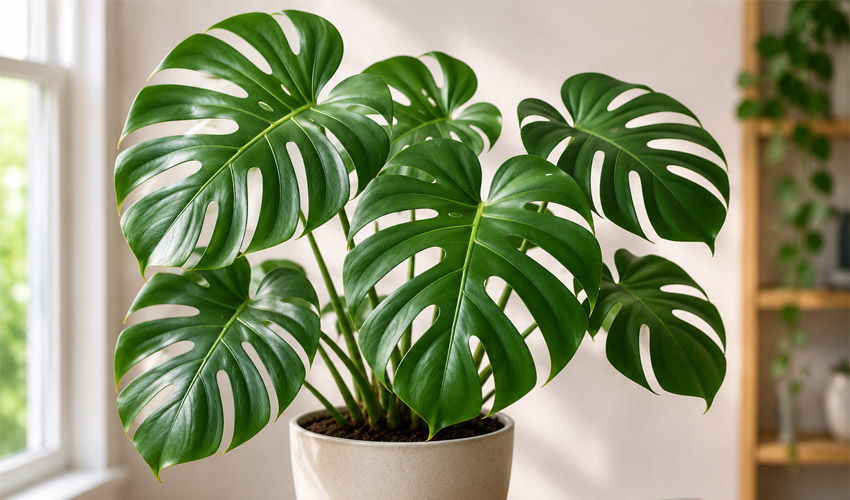
If your Monstera leaves are turning yellow, it’s a clear sign it needs some adjustments. If you’re new to growing Monsteras, you may be wondering about the best care for Monstera plant indoor. Fortunately, Monsteras are low-maintenance tropical plants that are easy to grow and tolerate minor mistakes.
Start by placing your Monstera in a spot with bright, indirect light. Water the plant only when the top inch of soil feels dry, as overwatering can lead to root rot and yellow leaves. Maintaining good humidity is equally important, so consider misting the leaves occasionally or using a humidifier, especially in dry indoor environments. Finally, support your Monstera’s natural climbing habit with a moss pole or trellis. This not only encourages healthier growth but also enhances the beauty of its large, striking foliage.
Conclusion
Understanding the common causes of yellow Monstera leaves—such as transplant shock, incorrect watering, poor lighting, or nutrient deficiencies—can help you identify and fix the problem early. With proper care and a few adjustments to your plant care routine, you can restore your Monstera’s healthy green foliage and keep it thriving for years to come.