Orchids often have a reputation for being tricky and delicate, which can make new gardeners nervous about trying them. Stories about failed blooms, dying roots, or strange leaf problems are common. But orchids are actually tougher than most people think. With the right care, they can grow well indoors for years. Most problems happen because their needs are misunderstood, not because the plants are weak.
Understanding common problems with orchids before they occur can make all the difference in successful care for orchid plants. Below is a detailed look at common orchid problems, why they happen, and how you can restore your plant’s health without stress.
Table of Contents
ToggleCommon Problems with Orchids
Brown or Crispy Leaf Tips
Brown tips on orchid leaves are a common problem. Usually, just the ends of the leaves look dry, brittle, or burned, while the rest of the plant seems healthy. This is often caused by salt buildup, not disease.
Using too much fertilizer is a main reason for this. Orchids do best with gentle feeding and don’t like strong fertilizer mixes.
To avoid this, feed your orchids lightly and regularly instead of giving them a lot of fertilizer at once. A weak liquid fertilizer every few weeks is usually enough. If you can, use rainwater, distilled, or filtered water. If not, rinse the pot well every few months to wash away minerals.
Bud Blast
Few things disappoint orchid lovers more than bud blast. After weeks of anticipation, flower buds suddenly shrivel and drop before opening. This can happen at almost any stage, whether the buds are tiny or nearly ready to bloom.
Bud blast happens when the plant is stressed and puts its energy into surviving instead of blooming. There are several possible causes. Big changes in watering, like letting the plant get too dry or too wet, are common triggers. Not enough light, dry air, or sudden changes in temperature can also make orchids drop their buds.
Other things like cold drafts, heat from vents, or certain gases can also cause problems. Ethylene gas from ripening fruit and methane can harm developing flowers. Overfeeding, pests, disease, or weak genetics might also be involved.
Once the bud blast starts, you can’t reverse it. The best way to avoid it is to keep your orchid’s environment steady. Try not to move the plant too much and focus on regular, balanced care instead of quick fixes.
Curling or Twisting Leaves
If your orchid’s leaves start curling in or twisting, it usually means the plant is stressed. Not watering enough is a common cause. Orchids need steady moisture, and prolonged dry periods can cause the leaves to lose their normal shape.
Leaves might also bend toward a bright light. This isn’t real curling; it’s a gentle arch as the plant seeks more light. Turning your orchid every so often helps it get even light and grow evenly.
If the potting mix stays evenly moist and your orchid gets enough light, a little leaf curling is usually nothing to worry about.
Yellowing and Dropping Leaves
It can be worrying when orchid leaves turn yellow and drop, even if they looked healthy before. This often means the plant isn’t getting enough nutrients. Over time, the potting mix breaks down and loses nutrients. If you haven’t been feeding your orchid regularly, it might drop older leaves to save energy.
Overwatering is another common reason. Too much water can suffocate the roots and cause them to rot. When roots are damaged, the leaves can’t get enough water or nutrients, so they turn yellow and fall off.
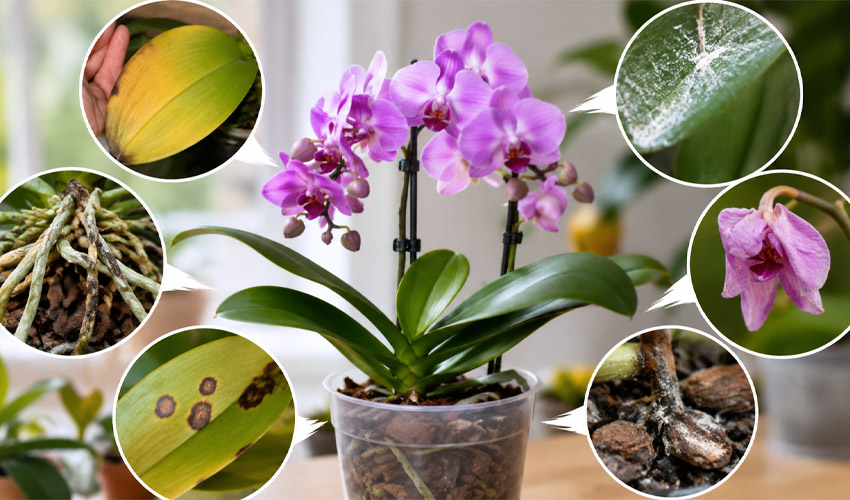
Before you do anything, check the roots. Healthy roots are firm and green or silvery. Rotten roots are dark, soft, and smell bad. If you find rot, repot the plant and cut away the damaged roots. If the roots look good, gently feed your orchid to help it recover.
Spots on Flowers
Spots on orchid flowers, especially on pale or white ones, are often caused by Botrytis, a fungus. It grows in cool, damp places with little air movement. You’ll see small brown or black spots that can spread fast if not treated.
If you see affected flowers, remove them right away to stop the fungus from spreading. Make sure there’s good air flow and try not to let water sit on the petals. Orchids need humidity, but still air and wet petals can help fungus grow.
Botrytis usually doesn’t cause lasting damage to the plant, but it can ruin the flowers if you don’t deal with it.
Bulb Rot
Bulb rot often occurs in sympodial orchids, such as cymbidiums. Older bulbs can turn brown, soft, and start to rot, especially if the plant hasn’t been repotted in a long time.
If the rotting bulbs are on the edge of the pot, you can remove them without disturbing the whole plant. Sometimes, cutting through the rhizome and taking out the bad bulbs fixes the problem. But if the rot is in the center, you’ll need to learn how to repot an orchid and do it as soon as possible.
Remove all the rotting parts carefully, including any bad sections of the rhizome. Treat the cuts with a fungicide, bactericide, or even a little cinnamon to help prevent infection. Repotting your orchid regularly lowers the risk of bulb rot and helps it grow better.
Orchids Stop Growing
If your orchid stops growing new roots, leaves, or flower spikes, the problem is often hidden below the surface. Good potting is very important for orchids. Unlike most houseplants, orchids need air around their roots. As the potting mix gets older, it breaks down and packs tightly, which cuts off airflow.
This can suffocate the roots and slow down growth, even if you’re watering and feeding as usual. Repotting gives the roots fresh air and new space to grow. It’s just as important as keeping the right temperature and feeding your orchid.
Using fresh moss or bark that matches your orchid’s needs can really boost its growth and health.
Orchid Pests
Indoor orchids have fewer pest problems than outdoor ones, but they can still get pests. Some common houseplant bugs can attack orchids and slowly harm them if you don’t notice.
Mealybugs and scale insects look like cottony or waxy bumps on leaves and stems. They suck the plant’s sap, weakening it over time. Spider mites are harder to spot, but you might see fine webs and speckled leaves. Thrips feed on pollen, move quickly across flowers, and can make blooms look odd.
Checking your orchids often is the best way to catch pests early. Insecticidal soap is effective against most orchid bugs and kills them on contact. Make sure to cover all parts of the plant, especially under the leaves and in small spaces. You might need to treat your orchid every week until the pests are gone.