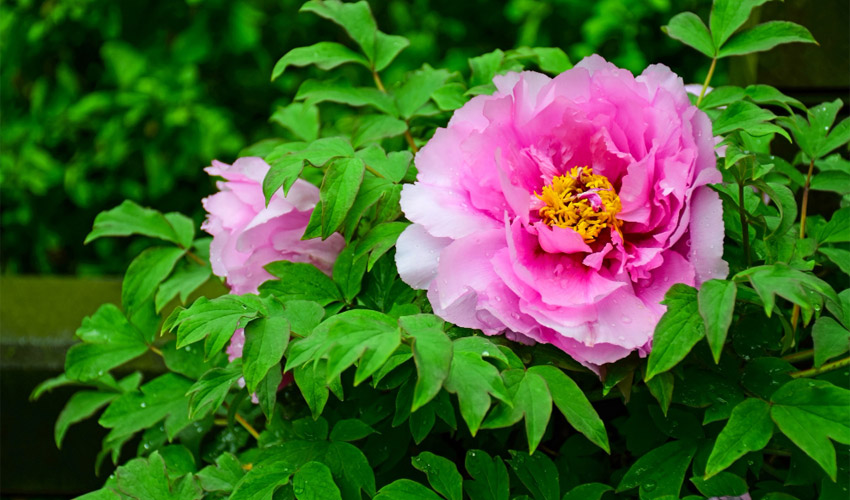
Few flowers capture the imagination like a peony in full bloom. Their large, soft blossoms evoke daydreams and add a touch of elegance to any garden. Whether you’re drawn to their romantic petals, delightful fragrance, or the fact that they can thrive for decades, peonies are every gardener’s delight. In the peonies growing guide, we’ll walk you through how to grow peonies that return stronger each year, the best spots to plant them, tips to prolong their flowering period, and why they truly reign as the crown jewel of any garden.
Table of Contents
ToggleHow to Plant Peonies
Peonies are commonly sold in small pots, such as 1-gallon containers, or as bare roots wrapped in peat moss or wood shavings. At plant sales or garden swaps, you’ll usually find bare-root varieties.
When selecting potted peonies, look for healthy plants with strong stems and no leaf spots. For bare roots, check that they have three to five “eyes,” as these buds will develop into stems. Peonies are best divided when they are three to four years old. Clumps with fewer eyes can still grow, but they will take longer to become established.
When to Plant
Peony bloom times range from late spring to late summer, depending on the variety. However, the ideal time to plant them is in the fall, roughly six weeks before the soil freezes. This allows the roots to settle and establish before winter arrives. This timing is crucial for bare-root peonies or when transplanting existing plants. Even potted peonies tend to perform better when planted in the fall.
Choosing a Planting Location
Pick a site that is protected from strong winds. Peonies have large, heavy flowers, and their stems can bend or collapse during heavy rain or storms. Plant them away from trees and shrubs, as they prefer not to compete for sunlight, water, or nutrients.
Spacing, Depth, and Support
Allow each peony enough room to grow fully without overcrowding—generally about 3 to 4 feet of space around each plant.
Peonies require a period of cold during winter. Plant the roots roughly 2 inches below the soil surface to encourage dormancy and proper bud formation.
Providing support, such as staking or a plant ring, will help your peonies keep their upright shape and prevent heavy blooms from drooping.
Transplanting Peonies
If you need to move an established peony, do so carefully to avoid disturbing the roots. These plants can thrive in one spot for decades, but moving them hastily can stress or even kill the plant. Fall is the ideal time for transplanting. You will need compost or peat moss, a sharp spade, and a tarp. Follow these steps to move your peony safely:
- Prepare the new site: Loosen and aerate the soil down to 12 to 18 inches, then mix in a 4-inch thick layer of compost or peat moss.
- Hydrate the plant: Water the peony with about 1 inch of water a day or two before transplanting so the roots are well-hydrated.
- Lift the plant carefully: Dig around the root ball with a sharp spade, keeping as much soil intact as possible. Slide a tarp under the root ball, then lift or carefully slide the plant to its new location.
- Plant at the right depth: Make a hole twice the width of the root ball and the same depth. Place the peony at the same depth it grew in its previous location.
- Backfill and settle: Fill the hole with soil and tamp lightly by hand. Avoid packing it too tightly.
- Water and mulch: Water thoroughly, then add a 3-inch thick layer of compost or mulch around the base. This keeps the roots moist and cool while the peony establishes itself in its new home.
How to Care For Peonies
To grow healthy, flourishing peonies, pay attention to these key care requirements:
Light
Peonies thrive in a spot that receives at least six hours of sunlight daily, though a full day of sun is even better. Without enough light, flowers may be smaller, fewer blooms will appear, and the plant becomes more prone to fungal problems.
Soil
Peonies adapt to a variety of soils but do best in well-drained, slightly acidic soil with a pH around 6.5–7.0. If your soil is dense or clay-like, add in compost or a soil blend suitable for azaleas and rhododendrons to help your peony establish. Since peonies can remain in the same location for decades, taking the time to prepare the soil properly is worth it.
Tree peonies prefer slightly more alkaline soil than herbaceous peonies and do not tolerate competition from nearby shrubs.
Water
Peonies prefer soil that stays consistently moist but drains well. They typically need about one to two inches of water each week. While they can handle occasional wet conditions, prolonged drought can stress the plants. Spreading mulch around the base helps keep the soil consistently moist and keeps weeds under control.
Temperature and Humidity
These plants thrive in cooler climates and require a period of cold winter temperatures to bloom properly.
Fertilizing
Peonies benefit from light feeding. A simple annual application of compost mixed with a small amount of general-purpose fertilizer around the base is usually sufficient. Apply this just after the plants have finished flowering. Avoid over-mulching in winter; in the first season, a loose layer of pine needles or shredded bark is fine, but remove it in spring to prevent smothering.
Tree peonies have slightly different needs. They respond well to nutrients like iron and phosphate and benefit from a spring application of sulfate and bone meal. Unlike herbaceous peonies, they also do well with regular feeding using a balanced fertilizer, such as a 5-10-5 formula, to support healthy growth and blooms.
How to Get Peonies to Bloom
Peonies generally bloom from early spring to early summer, with flowers appearing between April and June, depending on the variety.
Peony blossoms vary widely in size, shape, color, and fragrance. Individual flowers can range from 3 to 6 inches across and may appear in single, semi-double, or double forms. Their colors span from white and soft pink to deep red, purple, and coral. Some varieties produce a strong, pleasant fragrance reminiscent of roses, spices, citrus, or a light sweetness, while others have little to no scent.
To encourage abundant blooms, plant peonies in a spot that gets at least six hours of direct sunlight daily. Keep the roots no more than two inches below the soil surface, and feed the plants lightly once a year. Avoid smothering the roots and eyes with mulch, and do not overfertilize with nitrogen, as these can hinder flowering. After the blooms fade, trim the spent flowers to encourage healthy growth and maintain the plant’s appearance.