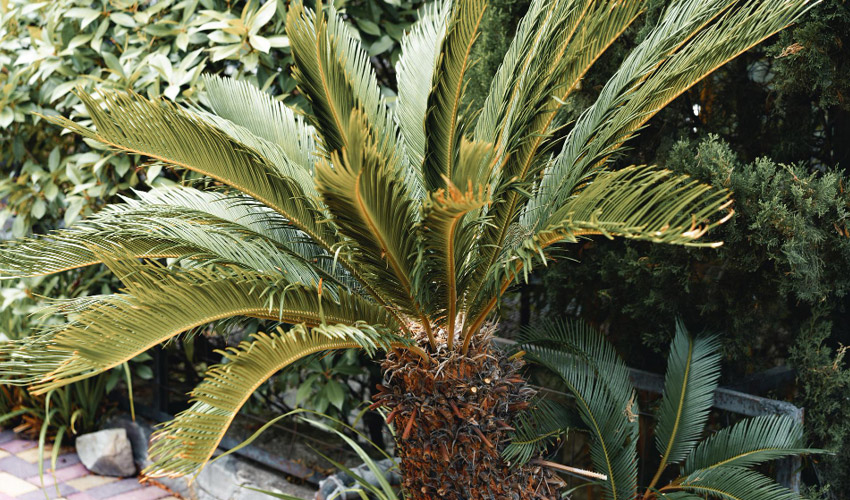
The King Sago Palm Tree, or Japanese Sago Palm, is a great plant that is easy to grow and has been around since the time of the dinosaurs.
Because of their beauty and fern-like leaves, Sago Palms are a popular choice for tropical gardens and indoor spaces. It’s also easy to grow and take care of these palm trees. With this guide to growing, caring for, and propagating the Sago Palm tree, you will be able to fully enjoy its beauty!
Table of Contents
ToggleHow Big Do Sago Palms Get?
Don’t be scared off by how big these plants can get. Sago palms can live for a long time, even up to 200 years! They grow really slowly. It could take them 50 years to reach their full height of 10 feet and width of 5 feet.
But as houseplants, they might grow to be 2 to 3 feet tall after a few years. They only grow a few inches each year, so they are very slow. Remember that sago palms are poisonous to kids and pets if they eat them.
Sago Palm Care
Follow these steps to take care of a Sago Palm. You will get to know how to water, what kind of light, temperature, and humidity it needs to grow well.
Sunlight
Sago palms like bright, indirect light more than some direct sunlight in the morning. A window facing east or west is best, but a window facing south with a little bit of light coming through can also work. If the plant gets too much direct sunlight in the afternoon, its leaves can get burned. If it doesn’t get receive light, its leaves can drop.
If your space doesn’t get enough light, think about putting a grow light over the plant for 8 to 12 hours a day.
Water
Sago palms can handle dry conditions and like to dry out between waterings. You can check the moisture level by sticking your finger into the soil or using a moisture meter. When the soil is completely dry, water it well, making sure that any extra water drains out of the bottom of the pot. Don’t let the plant sit in water that isn’t moving, as this can cause root rot.
During the growing season (spring and summer), water more often, but be careful not to give them too much water, as this can cause root rot.
Humidity
The Sago Palm can handle normal levels of humidity in a room, but you might want to raise the humidity in dry places. If you are not sure about the humidity, use a hygrometer or LTH meter to measure how humid it is.
Temperature
Sago palms do best when the temperature is between 65°F and 80°F (18°C and 27°C). They can handle some cooler weather, but they should be kept safe from frost. Don’t let the plant get drafts or sudden changes in temperature, as these can stress it out.
Soil
Mix Cacti soil or regular potting mix with extra perlite or sand to make a potting mix that drains well. Make sure the pot has drainage holes so that the roots don’t get too wet. You should also repot the plant every 2–3 years or when it becomes root-bound.
Fertilizing
During the growing season (spring and summer), give your Sago palm a balanced fertilizer. You can also use slow-release granules mixed into the soil instead of a fertilizer that dissolves in water. Don’t use too much fertilizer, because this can cause nutrients to build up.
Pruning
To keep your Sago palm looking neat and healthy, cut off any fronds that are dead or turning yellow. Use clean, sharp pruning shears so you don’t hurt the plant. The plant’s fronds have sharp edges, so you should wear gloves when you touch it.
Toxicity
All parts of the Sago palm are poisonous if eaten, especially for kids and pets. Be careful when you handle the plant and keep it out of their reach.
Propagating Sago Palm
Palms can be propagated from seed, but the process takes longer and often gives unreliable results. Propagation by division is usually the faster and easier option.
Sago palm produces pups or offsets that resemble baby plants growing in clusters around the base. Separating these pups from the parent plant reduces crowding, lowers competition for water, and improves air circulation around the base. The best time to transplant offsets is early spring or late autumn. Here’s how to grow them successfully:
- If your sago palm has pups or side shoots, you can divide the plant. Gather a hand trowel, knife or scissors, a container, and well-draining soil suitable for palms. Sterilize all tools with an alcohol- or bleach-based solution before use.
- Some offsets come away easily with a gentle pull, while others may need to be carefully cut or loosened with a knife, scissors, or hand trowel.
- Place the removed offset on a tray in a shaded area for a few days so the cut surface can dry and form a callus. This helps protect the plant from disease.
- Fill a pot partly with free-draining soil. Choose a pot about 2 inches wider than the offset, leaving around 2 inches of space at the bottom for root growth. Position the pup in the center and fill around it with soil. Water thoroughly.
- Keep the pot in a sunny indoor spot or a shaded outdoor location. Rooting usually takes a couple of months. Let the soil dry slightly between waterings.
Growing From Seed
Gardeners with male and female Sago palm plants can grow new plants from seeds purchased from a nursery or collected from an existing plant. Only pollinated seeds will germinate.
- Put all the seeds into a bowl filled with warm water. Seeds that sink to the bottom are usually pollinated and viable. Soak these seeds for 24 hours to soften the outer covering, then remove the membrane.
- Fill 4-inch pots with a mix of perlite and peat moss. Lay each seed on its side and cover it so that about one-third remains visible above the soil surface.
- Lightly moisten the soil and cover each pot with a plastic bag to retain humidity. Keep the pots in a warm area with temperatures of at least 70°F (21°C).
- Check regularly to ensure the soil stays moist. Growth usually appears within one to three months. Once sprouts emerge, remove the plastic bag and keep the pots in a warm location.
- When four leaves appear, transplant the seedling into a larger container and place it in a bright, warm spot for several months while the roots develop.
- Move it to an outdoor container in early spring or continue growing it indoors as a houseplant.
Common Pests
There aren’t many problems with pests or diseases when it comes to sago palms. But spider mites and scale can be a problem. Watch out for signs of spider mites, such as leaves that are damaged or discolored, as well as small bugs hiding among the fronds. Try to use an organic insecticide like neem oil or homemade insecticidal soap before using stronger chemicals. Also, make sure your plant has enough humidity and air flow.