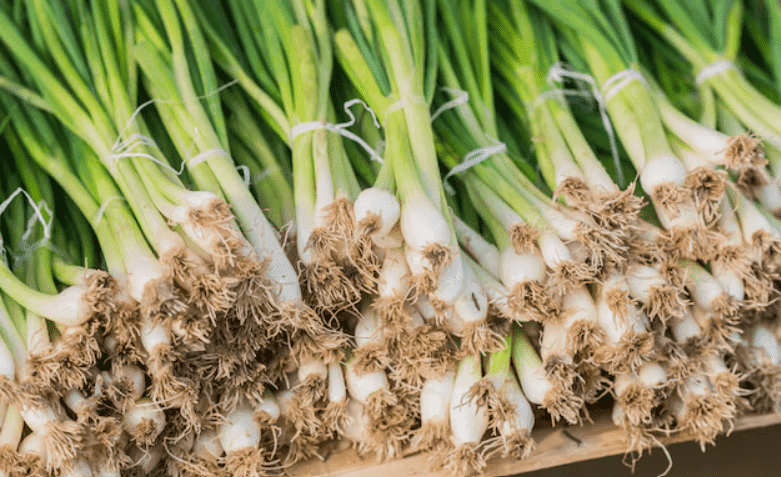
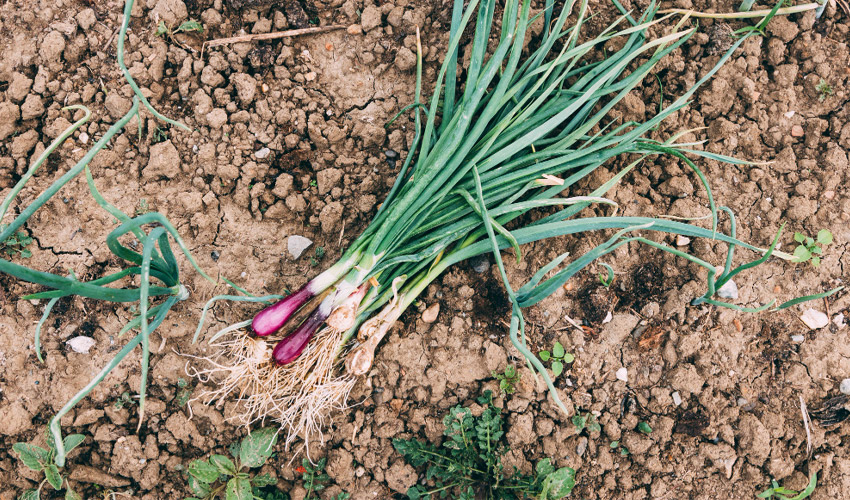
Scallions (Allium fistulosum), often called bunching or green onions, produce long green tops and white bases rather than forming full bulbs. You can slice them fresh and use them as a crisp garnish over soups and a variety of cooked dishes. In many Asian cuisines, cooks add finely chopped green onions toward the end of stir-frying, allowing them to soften slightly just before serving. You can also mix them into salads for a mild bite, or grill them whole for a simple, flavorful side.
Home gardeners can also grow another variety of green onion, the Egyptian walking onion, commonly called the “tree onion” (Allium cepa var. proliferum).
For healthy growth and intense flavor, all onion varieties need full sunlight.
Table of Contents
ToggleHow To Plant Scallions
Here are some essential scallions planting tips to help you get started successfully.
From Seeds
- Sow seeds directly into the ground as soon as the soil becomes workable.
- Plant seeds in a two-inch-wide band, placing them one-fourth to one-half inch deep, with rows spaced 12 to 18 inches apart.
- Once seedlings sprout, thin them to maintain one plant per inch.
Transplanting
- Start seeds indoors approximately four weeks before moving them outdoors. For an early May transplant, sow seeds in early April.
- Plant seeds one-fourth to one-half inch deep and keep the soil consistently moist.
- Before transplanting, create a narrow furrow or trench approximately two inches deep.
- Gently loosen the seedlings so you can separate them without damage.
- Cut roots back to about one-half inch and trim the tops to roughly four inches.
- Set transplants one inch apart in the furrow, then cover them with soil.
- Water thoroughly after planting.
How to Regrow Scallions
You can easily regrow scallions by saving the root ends. You can even start new growth using scallions purchased from the grocery store. Cut off the bulb ends while keeping the roots intact. Place the root ends upright in a small jar and pour in enough water to cover the roots, making sure the tops stay above the waterline. Set the jar in a bright window and top up the water as it evaporates. Within a few days, fresh green shoots will emerge from the tops. Keep the roots submerged and replace the water once a week.
Scallions cannot live in water forever because water alone does not provide the nutrients they need to grow strong. When the shoots reach about four inches in height, transfer the rooted ends to a pot or directly into the ground using high-quality potting soil. When cooking, trim the leaves as needed. You can cut them all the way down, and they will grow back. One bulb can provide three to five harvests.
If you remove the bulb and continue regrowing it in water or divide the roots each spring, you can maintain a steady supply of scallions year after year. Scallions tolerate cold well and will regrow in early spring.
Scallions Care Tips
Watering
- If your planting area receives less than one inch of rainfall per week, deeply water the soil at least once weekly.
- Sandy soils dry out faster, so they need more frequent watering than heavier soils.
- One inch of water penetrates sandy soil to about 10 inches deep, while dense clay soil absorbs moisture to about 6 inches.
- Use a trowel to check moisture depth. If the soil is damp only an inch or two below the surface, continue watering.
Controlling Weeds
- Early in the growing season, weeds can quickly overtake young scallion plants.
- Remove weeds carefully and often to keep the bed clean.
- As the season progresses, scallions grow thick enough to suppress most weed growth.
- Weed walking onion beds consistently as well, since perennial weeds like quackgrass can become troublesome in long-term plantings.
Harvesting
- Harvest scallions once they reach a suitable size. Loosen the soil with a trowel if needed to prevent plants from snapping at the soil surface.
- From the second year onward, harvest walking onion greens the same way you would chives. The plants will continue producing fresh leaves.
Common Pests and Plant Diseases
Several insects and soil-dwelling pests can affect scallions. Stay alert for cutworms, onion maggots, onion nematodes, slugs, thrips, aphids, and allium leaf miners. If you notice signs such as chewed leaves, discoloration, or weak growth, rotate your next planting to a different part of the garden to reduce the risk of future infestations.
Scallions can also develop diseases like mildew, leaf spot, and rust, particularly when growing conditions are poor. To prevent these issues, provide adequate sunlight, avoid overcrowding, and maintain consistent, but not excessive, moisture in the soil.
FAQ
Are scallions easy to grow?
Yes, scallions grow easily when you provide adequate sunlight and consistent moisture.
How long do scallions take to grow?
Most varieties reach harvest size within about 60 to 80 days after planting.
Can you grow scallions indoors?
Scallions grow well indoors when placed near a sunny window or under suitable grow lights.