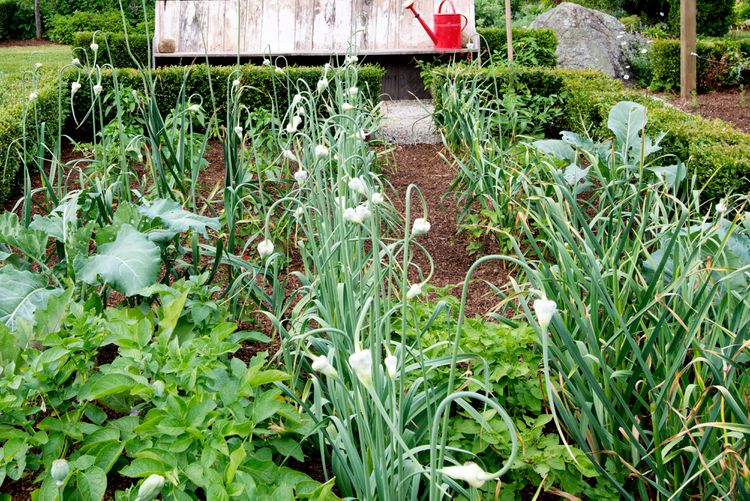
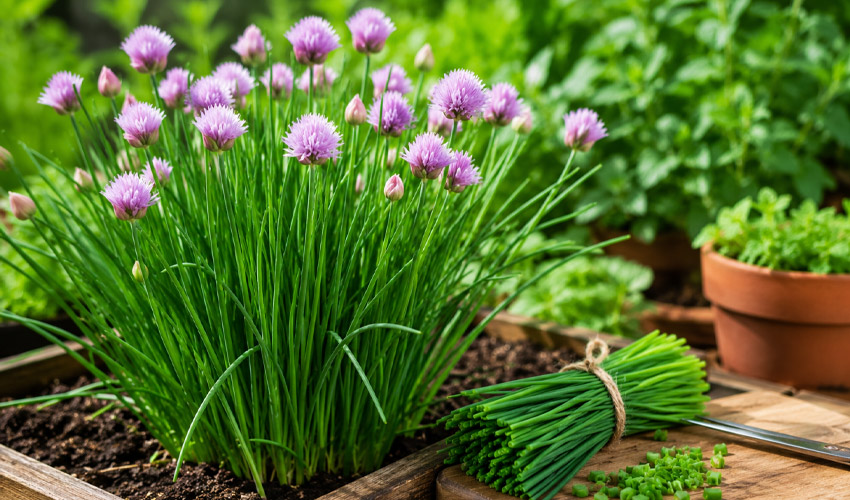
Chives (Allium schoenoprasum) are simple to cultivate. They are a grass-like perennial herb belonging to the family of onions and garlic. They offer a gentle onion taste that works well in salads or as a topping for soups. Their beautiful, edible purple flowers are a great addition to any garden. Chives attract bees and other beneficial pollinators and deter certain insects. They are often grown alongside vegetables to help keep away Japanese beetles and other harmful garden pests.
These frost-hardy perennial herbs are well-suited to cooler climates and are commonly planted from nursery divisions in early spring for an abundant harvest starting in late spring. When you grow them from seed, they generally become ready for harvest within about two months.
Chives Varieties
Besides common chives (Allium schoenoprasum), there are three other closely related Allium species that are widely cultivated as garden chives:
- Allium tuberosum (Garlic chives), also known as Chinese chives, closely resembles common chives but has a delicate garlic flavor. They usually grow a little taller, produce flatter, darker green leaves, and always develop white flowers. They are also less resistant to cold temperatures.
- Giant Siberian chives (Allium ledebourianum) have a more intense flavor than most other chive types, combining bold onion and garlic notes. This variety grows taller and produces large rose-violet blooms.
- Siberian garlic chives (Allium nutans) have a unique onion-garlic taste. They produce upright blue-green leaves and attractive pink flowers that appear during midsummer.
Planting
Where to Plant Chives
Chives love full sun, though they can also grow well in partial shade. They prefer moist, nutrient-rich, and well-drained soil. Before planting, mix 4 to 6 inches of well-rotted organic compost into the soil. Work the compost down to a depth of 6 to 8 inches to improve soil quality and support healthy root development.
When to Plant Chives
- Chives are a cool-weather herb that performs best during spring and autumn. The high heat of summer often causes the plants to become dormant until cooler conditions return.
- For an earlier harvest in colder climates, start chive seeds indoors around 6 to 8 weeks before the final spring frost. Seedlings should be well established before moving them outdoors.
- If you are sowing seeds directly outside, plant the seeds as soon as the ground becomes workable in spring. Germination may take a few weeks, so you have to be patient. For the best results, maintain a soil temperature between 60°F and 70°F (15°C to 21°C).
- Move transplants into the garden after the risk of frost has completely passed.
How to Plant Chives
- Sow the seeds approximately 2 inches apart and no deeper than ¼ inch. Gently cover them with a thin layer of soil.
- After the seedlings appear, thin them out so each plant has about 4 to 6 inches of space on every side, allowing enough room for healthy growth.
Growing
How to Grow Chives Outdoors
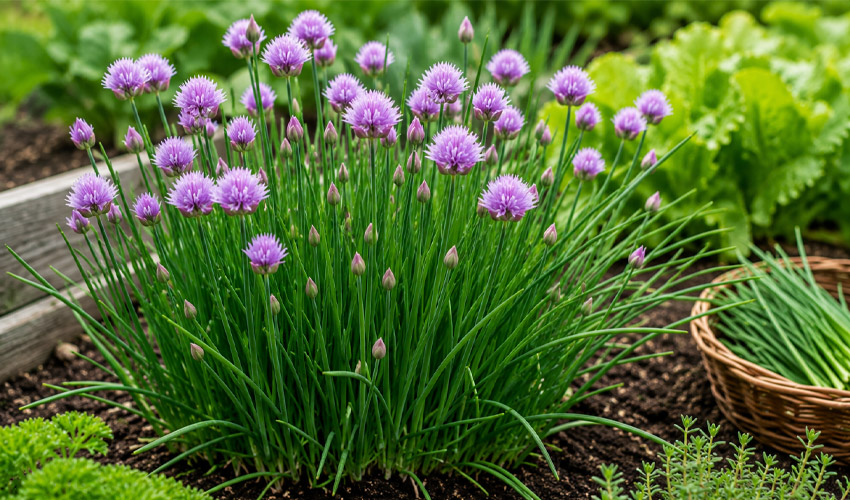
- Chive plants require very little maintenance once they are fully mature.
- Chives can tolerate dry conditions. Regular watering throughout the growing season helps produce a healthier and more abundant harvest. Water deeply to keep the soil evenly moist.
- Since chive bulbs develop close to the soil surface, apply a layer of mulch to retain moisture and reduce weed growth.
- If your soil is low in nutrients, feed the plants with a nitrogen-rich fertilizer during late spring or early summer to encourage vigorous growth.
- Once the flowers have finished blooming, remove the flower heads to prevent seeds from spreading throughout the garden.
- Divide chive plants every 3 to 4 years in spring to maintain strong growth and improve productivity. Separate them into clumps containing at least 10 small bulbs, then allow the divided plants to establish for a few weeks before harvesting.
How to Grow Chives Indoors
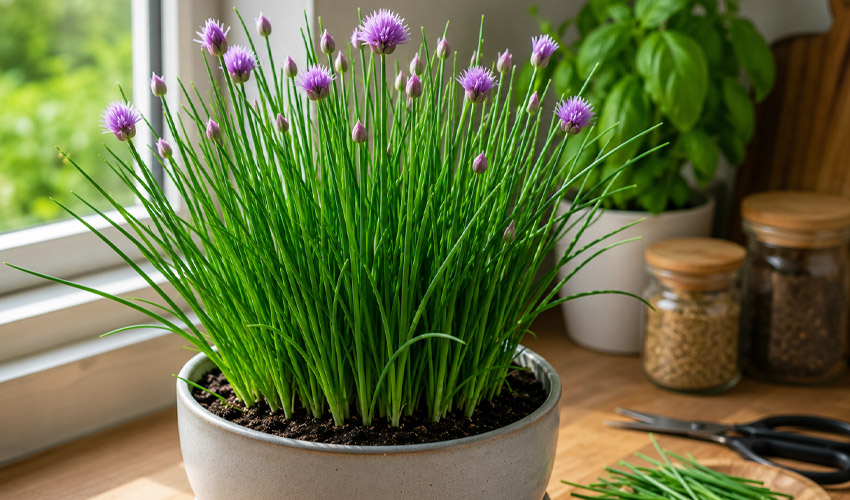
- Chives grow well indoors when placed in a bright location that receives plenty of sunlight.
- Choose containers with drainage holes at the bottom to prevent excess water from collecting.
- Fill the pots with a high-quality indoor potting mix that is light and drains well.
- Growth usually slows during winter because of reduced sunlight, and the plant may partially die back. It typically recovers once longer, sunnier days return in spring.
- Don’t apply fertilizer in the winter months.
Harvesting
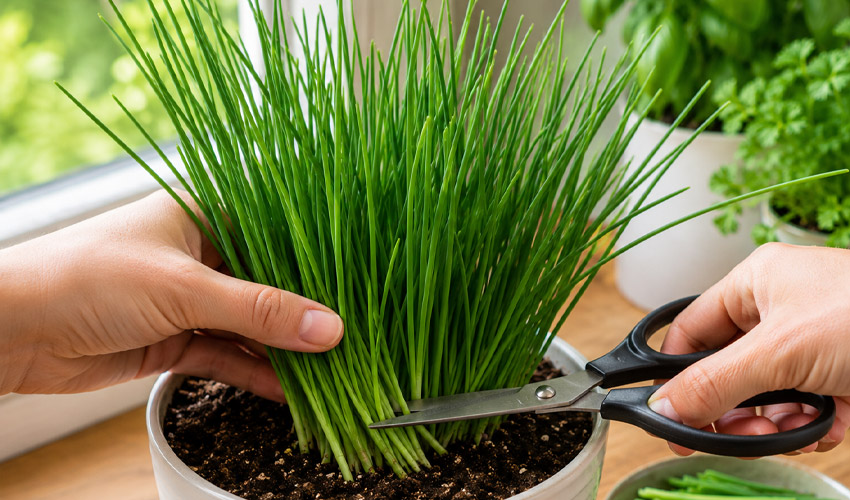
Chives are generally ready for harvest about two months after the seeds germinate, or around 30 days after planting nursery-grown seedlings. For a neat appearance and to encourage healthy new growth, trim the leaves all the way down to the base. You can harvest them whenever needed, but keep in mind that older leaves may become tougher and have a less delicate flavor. During their first year, new plants can be harvested four to five times, while well-established plants are usually ready for harvesting once each month.
Chives are best enjoyed fresh or frozen soon after they are picked to preserve their flavor. Drying them for storage significantly reduces their taste. If you plan to eat the flowers, harvest them as soon as they are fully open, as this is when they offer the best flavor.