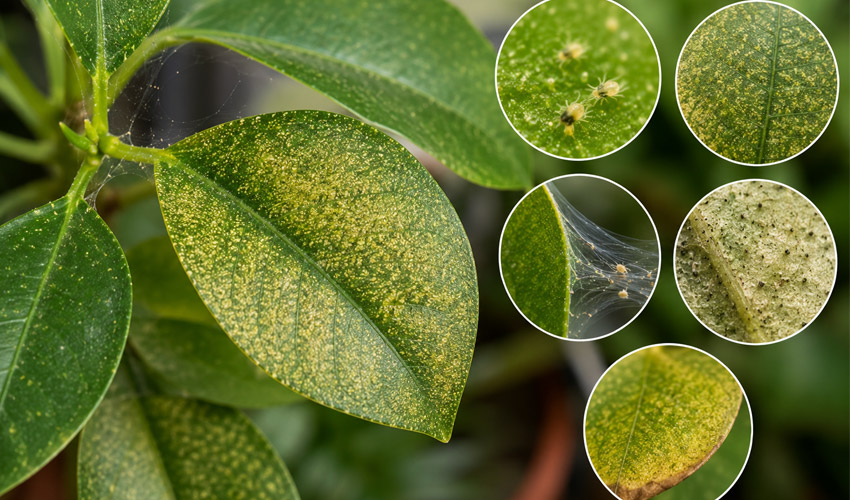
Spotting the first indications of spider mite activity gives you a better chance of saving a cherished houseplant. Acting quickly limits the risk of a full-blown outbreak and cuts down the need for repeated treatments. Early attention also helps you prevent spider mites from spreading to the rest of your plants.
If you notice tiny, round-bodied creatures about 1/50 of an inch crawling on your leaves, respond right away to get rid of them before they cause serious harm. This quick response can protect your plant from lasting damage. Below are some early signs of spider mites to watch for.
Table of Contents
ToggleTypes of Spider Mites
Scientists have identified around 1,200 different species of spider mites, all classified under the Tetranychidae family. These pests are nearly impossible to see with the naked eye, so a microscope or a 10–20x magnifying glass is usually needed to spot them.
Below are a few common species you’re likely to come across in your garden or landscape:
Oak spider mite (Oligonychus bicolor). Also called the oak red mite, this species primarily feeds on red oak but can also infest beech, chestnut, elm, and maple trees. They appear dark reddish-brown in color and are most commonly found from North Carolina across to western Kansas. When trees are infested, the lower leaves often turn yellow or bronze.
Spruce spider mite (Oligonychus ununguis). This pest attacks conifers such as arborvitae, hemlock, juniper, spruce, fir, and sometimes pine. Infected trees often show fading or discolored needles, and you may notice fine webbing between them. Spruce spider mites thrive in cooler seasons like spring and fall, becoming less active in hot summers. Severe infestations can weaken trees so badly that removal may become necessary.
Two-spotted spider mite (Tetranychus urticae). Unlike many other species, this mite produces silk webbing as it moves, covering leaves as it feeds. It is one of the most widespread spider mites and multiplies quickly in hot, dry weather. Two-spotted spider mites feed on a wide variety of plants, including vegetables, fruit trees, flowering plants, shrubs, and even houseplants. Adults are usually pale with two distinct greenish spots, while females often turn reddish-orange during the winter months.
Early Signs of Spider Mites
Pay attention to these five early signs of spider mites:
Webbing
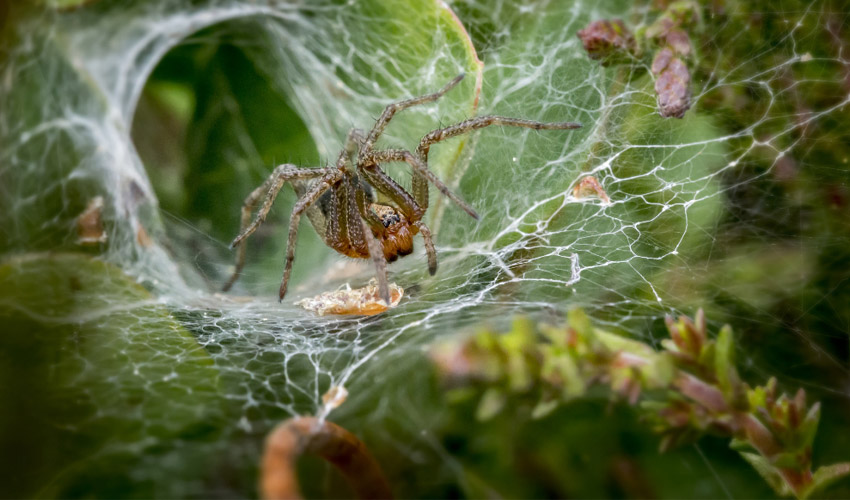
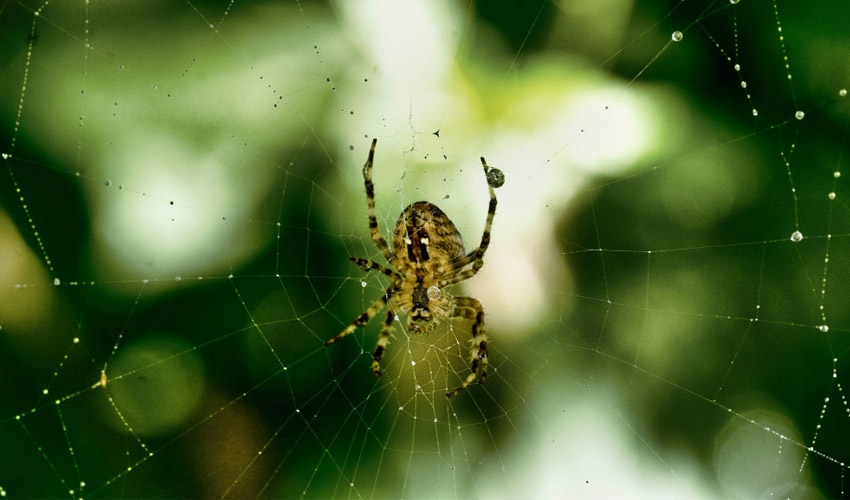
Spider mites are members of the arachnid family that spin webs. Discovering fine, silken webbing is the most visible early sign that mites are present. Webs start small between closely spaced plant parts, such as at the juncture of a leaf and a stem. Extensive, large webs or multiple web points indicate an infestation.
Stippling on Leaves
Feeding takes place mainly on the undersides of leaves. Mites use mouth parts to puncture and suck juices from foliage. This sucking action leaves behind a stippled look of tiny white or yellow spots, which often requires a magnifying glass to see. Extensive damage causes holes in the foliage and is a sign of a more severe infestation.
Leaves Turn Yellow and Drop Off
Yellowing foliage is caused by any number of problems, with improper watering usually the reason. If the plant is adequately hydrated, check for signs of spider mites, like webbing or stippling. Premature loss of leaves means extensive damage is interrupting nutrient flow and causing chlorosis. Spider mites proliferate in hot, dry conditions, so keeping plants well-hydrated and out of bright, direct light can help prevent and correct spider mite problems.
Stunting on New Growth
A plant struggles when its new growth is stunted, leaves fail to unfurl, become misshapen, or flower buds drop before opening. Spider mite damage leads to a loss of the plant’s vigor, which it needs to grow.
Dusty Leaf Appearance
If you notice a plant’s leaves appear dusty, inspect them up close for spider mite webbing. Wash the leaves to help remove the webbing, reduce the spider mite population, and restore leaves to their original, healthy appearance.
Why Do You Get Spider Mites?
Certain growing conditions make your plants highly attractive to spider mites. These pests thrive in hot, dry environments, especially when temperatures exceed 80 °F and humidity drops below 50%.
Another reason you might notice spider mites is after applying pesticides. Chemical sprays often eliminate beneficial insects, leaving plants unprotected. Once natural predators disappear, spider mites can reproduce rapidly and spread across your garden.
In nature, predatory mites, lacewings, thrips, and even other arachnids usually keep their numbers under control. Without these natural enemies, infestations can build up quickly and overwhelm plants.
Are Spider Mites Dangerous?
Spider mites are plant feeders, not threats to people or pets. They don’t bite humans, but they can seriously weaken or even kill plants by sucking nutrients from the leaves. This damage reduces plant vigor, stunts growth, and can cause entire crops to fail.
The two-spotted spider mite alone feeds on more than 1,200 plant species and has been known to wipe out entire fields of potatoes and other crops, creating serious agricultural losses.