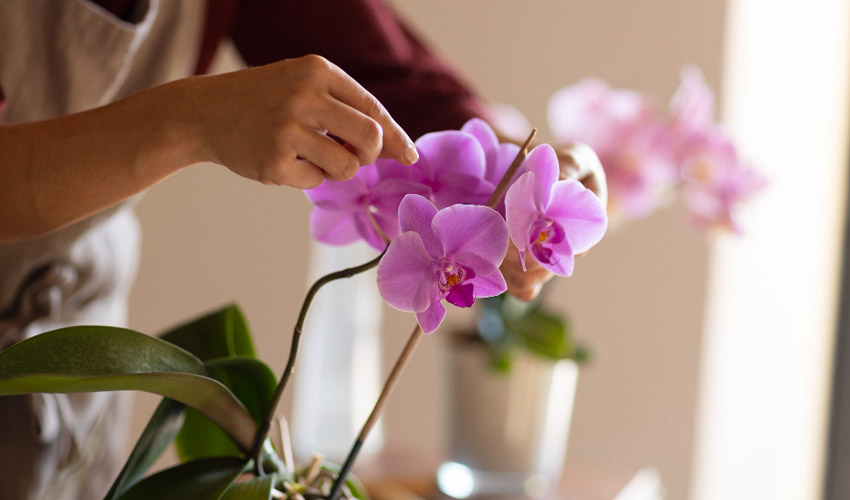
Orchids are stunning flowering houseplants and remain among the most beloved indoor plants. That comes as no surprise, because their vibrant blooms instantly catch the eye and add elegance to any space.
Moth orchids, also known as Phalaenopsis, are the most widely grown orchid variety. They bloom for weeks at a time and now come in a broad range of shades and patterns. Because moth orchids gained so much attention, many other orchid types have also become popular as houseplants. These include Dendrobium, Paphiopedilum, Oncidium, Vanda, and Cambria hybrid orchids.
Most of these orchids adapt well to indoor conditions and grow easily in regular home environments. They reward growers with striking, exotic flowers that feel truly special. If you want your orchid to stay healthy and bloom longer, proper care is key.
Table of Contents
ToggleOrchid Care Tips
Use these simple guidelines to properly care for orchid plants and keep them healthy, strong, and blooming longer.
Light
Orchids need plenty of bright light to flower well. Place them where they receive strong but indirect sunlight for several hours a day. A south- or east-facing window works best. Keep orchids out of direct sunlight, as it can burn the foliage and weaken the plant.
Soil
Orchids grow best in a special, well-draining growing medium. Most orchid mixes contain bark pieces, sphagnum moss, perlite, and peat to support healthy roots. You can buy a ready-made mix or prepare your own. Ordinary potting soil is not ideal for orchids and can cause root problems. A slightly acidic growing medium gives the best results.
Water
Orchids prefer drying out between watering sessions, which helps prevent root rot. When the pot feels light and the growing medium feels dry, it’s time to water. During warm months, orchids usually need watering about twice a week, while in cooler months, once a week or even less often works well.
Always use room-temperature water and pour it slowly until extra water drains from the bottom of the pot. Before watering, check the roots closely. Firm white or green roots show good hydration. Wrinkled gray roots mean the plant needs water, while soft black or brown roots often indicate rot.
Temperature and Humidity
Orchids like moderate temperatures, usually between 50°F and 90°F, depending on the type. They also prefer humidity between 40 and 70 percent. A warm, slightly humid room helps them bloom longer.
Keep orchids away from cold drafts, strong sunlight, and dry air from heaters or air conditioners. Immediate temperature fluctuations can stress the plant and reduce blooms.
Fertilizer
Fertilize orchids during their main growing season, usually in spring and summer. Use an orchid fertilizer and follow the label instructions. Don’t fertilize in winter, since orchids grow more slowly then.
Air Circulation
Orchids need steady air movement to stay healthy and avoid disease. Give each plant enough space for air to move around it. Don’t crowd orchids together or put them too close to other plants.
Choose a spot where fresh air circulates without becoming too hot or too cold. Avoid placing orchids near vents, as strong airflow can dry them out or cause temperature stress.
Pruning
Trim the faded flowers as soon as they start turning yellow, using clean, sharp scissors. Avoid cutting yellowing leaves that still feel firm, as the orchid continues to move nutrients from these leaves to other parts of the plant. After the last flower falls from the stem, trim the flower spike back by about half. This step can encourage the plant to produce a fresh side shoot with new blooms.
For orchid types that grow small pseudobulbs at the base, such as Cymbidium, Cambria, Miltonia, Miltoniopsis, Oncidium, and Zygopetalum, do not remove bulbs even if they look yellow or brown. These bulbs store water and nutrients, helping support healthy growth.
Staking
Orchids usually come with support stakes to keep the flower stems upright. While the plant can bloom well without support, the flowers naturally arch and hang when growing in the wild. Staking remains a personal choice rather than a necessity.
If you prefer neat, upright flower spikes, you can keep the stake in place. If you like a more natural, flowing look, allow the stems to cascade freely.
How to Repot Orchids
When an orchid’s roots grow far outside the pot or the growing medium breaks down, the plant needs repotting to stay healthy. Always wait until flowering ends before you begin, as repotting during bloom can stress the plant.
If you’re learning how to repot an orchid, follow these easy steps for optimal results:
- Remove the orchid from the pot: Gently slide the plant out of its container. Lightly moisten the growing medium if needed to loosen the roots without damage.
- Trim damaged roots: Use clean, sterilized scissors to cut away dead, soft, or unhealthy roots.
- Place in a larger pot: Choose a slightly bigger container and position the orchid inside.
- Add fresh growing medium: Fill around the roots with an airy orchid mix, keeping it loose to allow airflow.
- Stake if needed: Add a support stake if the orchid feels unstable, as new roots need time to anchor.
After repotting, place the orchid in bright, indirect light and keep the growing medium slightly damp. With proper care, new roots will grow, secure the plant, and support future blooms.
How to Encourage Orchids to Flower Again
With moth orchids (Phalaenopsis), you can often trigger another round of blooms with the right pruning. Once all the flowers have dropped, trim the stem just above a visible joint, also known as a node. This cut can encourage the plant to produce a new flowering shoot. If a fresh stem appears, you can attach it to a support for a neat, upright look.
If no new growth develops and the old stem turns dry and straw-colored, cut it back to the base. This step helps the plant focus its energy on healthy leaves and roots.
For most other orchid varieties, reblooming on the same stem rarely happens. In these cases, remove the old flower stems as soon as blooming ends. Proper pruning, along with consistent light, watering, and feeding, plays a key role in encouraging orchids to bloom again.
Common Pests And Plant Diseases
Orchids rarely suffer from serious pest problems, but they can still attract common houseplant insects. These include aphids, fungus gnats, mealybugs, spider mites, scale insects, thrips, and whiteflies.
You can remove most pests easily by brushing them off by hand, rinsing the plant with a stream of water, or using homemade insecticidal soap. Neem oil also works well, as it helps control and suffocate insects.
Besides pests, orchids may develop diseases when conditions stay too damp. Overwatering can cause root rot, while fungal issues such as anthracnose, phytophthora, botrytis, leaf algae, and petal blight may also appear.