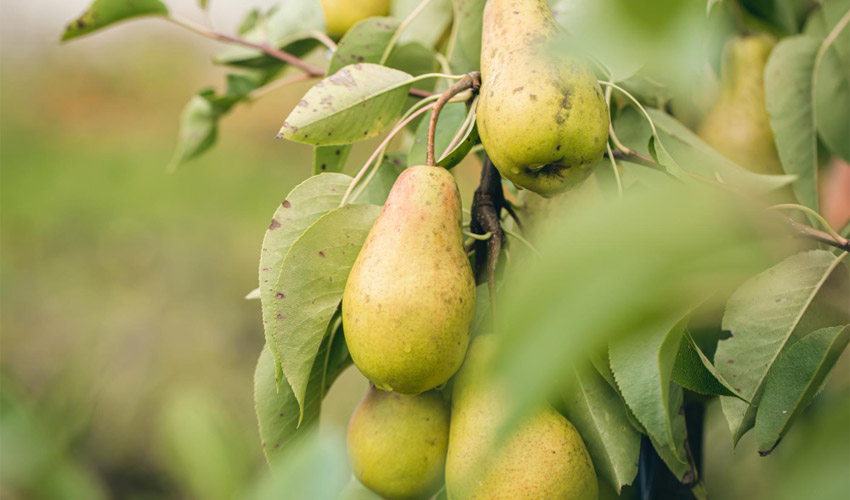
Pear trees add beauty and purpose to any garden. They produce delicate spring flowers, rich autumn foliage, and reward gardeners with sweet, home-harvested fruit.
Because pear trees are grafted onto root systems that control their size, they fit well in compact gardens and even containers. Smaller varieties thrive in limited spaces and need very little ongoing care. Gardeners can also choose from a wide selection of pear varieties, each offering unique tastes and textures that go far beyond what’s typically available in stores.
Table of Contents
ToggleHow to Grow Pears
Learn how to grow pears by following the steps below to get the best fruit yield.
Cultivation
Pear trees grow best in a bright, sunny location that stays sheltered from harsh winds. Excessive wind can discourage bees from visiting the blossoms, which directly affects pollination and reduces fruit production. Choose a planting spot away from low-lying frost-prone areas, as cold air can damage flowers and limit successful pollination.
These trees thrive in rich, nutrient-dense soil with ample organic matter. The soil should retain moisture well during spring and summer. Avoid ground that dries out too quickly or stays soggy.
Pear Varieties
There are hundreds of pear varieties grown around the world, but most garden centres and nurseries usually stock only a limited range of well-known, reliable options. Begin by deciding whether you want pears for fresh eating, cooking, or both. It’s also wise to select varieties suited to your local climate and soil, as they tend to perform better. Commonly available pear types include:
- Dessert (eating) pears: Beth, Concorde, Conference, Doyenne du Comice, Onward, Williams Bon Chretien
- Cooking pears: Catillac
- Dual-purpose pears: Jargonelle, Shipover
Rootstocks
Pear trees are usually grafted onto specific rootstocks that determine their final size and when they begin producing fruit. Growth can vary depending on soil conditions, as trees tend to grow larger in rich or heavy clay soils.
Common pear rootstocks include:
- Quince A (semi-dwarfing): Well suited for bush-shaped trees and espalier training, reaching around 3–4.2 m (10–14 ft) in height.
- Quince C (dwarfing): Starts fruiting slightly earlier and works best for cordon growing, with a mature height of about 2.4–3 m (8–10 ft).
Pollination
Some pear varieties can set fruit on their own, making them a good choice if you plan to grow just one tree or have limited space. These types produce fruit without needing a nearby pollination partner, although yields often improve when other pear trees grow close by.
Many pear varieties cannot self-pollinate and need a different variety that flowers at the same time to ensure proper fruit development. Even trees described as self-fertile usually produce heavier crops when compatible varieties grow nearby.
In most towns and cities, bees can easily travel from neighbouring gardens, so pollination rarely becomes an issue. However, in more remote locations, planting another pear variety from the same or a closely related pollination group helps ensure reliable and abundant harvests.
Planting
Plant bare-root pear trees between November and March, while container-grown trees establish best in autumn, winter, or early spring.
Dig a planting hole about 60 × 60 cm (2 × 2 ft) and 30 cm (12 in) deep. Work a generous layer of organic matter, like compost or well-rotted manure, into the hole. Set the tree in place and adjust the depth so the previous soil mark on the trunk sits level with the ground surface.
Mix additional organic matter into the excavated soil and backfill the hole firmly. Secure the tree with a strong stake and two ties to protect it from strong winds. Water thoroughly, spread a balanced general feed over the surrounding soil, and finish with a 5 cm (2 in) layer of mulch around the root zone to retain moisture.
For container growing, choose large patio pots at least 40–50 cm (16–20 in) wide. Fill them with a heavy, soil-based compost, as the added weight improves stability and supports healthy root growth.
How to Care for Pears
Once pear trees are established, they usually require little watering, except during prolonged dry spells. Providing water during the fruit-setting period can help produce a heavier harvest.
Trees grown in containers need more frequent watering in spring and summer to keep the compost from drying out.
Feed the tree each spring by applying a slow-release or granular fertilizer to the soil surface, ensuring nutrients are available throughout the growing season. Finish by adding a layer of mulch, such as well-rotted manure, garden compost, or bark chippings, to help retain moisture and improve soil health.
Pruning
Young, fully trained pear trees need very little pruning during their first few years. Over-pruning or cutting incorrectly can reduce fruit production, so it’s important to know what to remove and why. Generally, you only need to trim:
- Dead, diseased, or damaged branches
- Branches that cross or rub against each other
- Branches that grow in unwanted directions
If you find yourself constantly cutting the top of the tree to control height, it may be on an unsuitable rootstock.
Basic pruning rules:
- Free-standing trees: Prune in winter (December–January). Cut back shoots to around four buds to encourage new flowering and fruiting spurs, and thin out excess spurs.
- Trained trees (espaliers, cordons, pyramids): Prune in late summer by shortening new growth to 2 buds. A second winter prune can help thin older spurs and maintain shape.
Thinning Fruit
Pear trees often shed some fruit naturally in early summer, a process called the “June drop.” While pears can produce more fruit than the tree can support, they rarely need much thinning. If thinning is required, reduce fruit clusters to two fruits each, spacing them about 10–15 cm (4–6 in) apart to ensure healthy growth and larger, better-quality fruit.
Harvesting Pears
Pears should be picked just before they are fully ripe, as overripe fruit quickly becomes soft and loses quality. Look for firm fruit with a slight change in skin colour. For early varieties, you can taste a pear to check its sweetness. For later varieties, gently cup the fruit, lift, and twist—it should come away easily with the stalk attached.
Pears improve with a short ripening period before eating. Early varieties usually need about a week, while later ones may take up to a month.
Store harvested pears in a cool, dark place with good airflow. Use a slatted or ventilated box, spacing the fruit so air can circulate. Check regularly and remove any fruit showing signs of rot to protect the rest of the harvest.